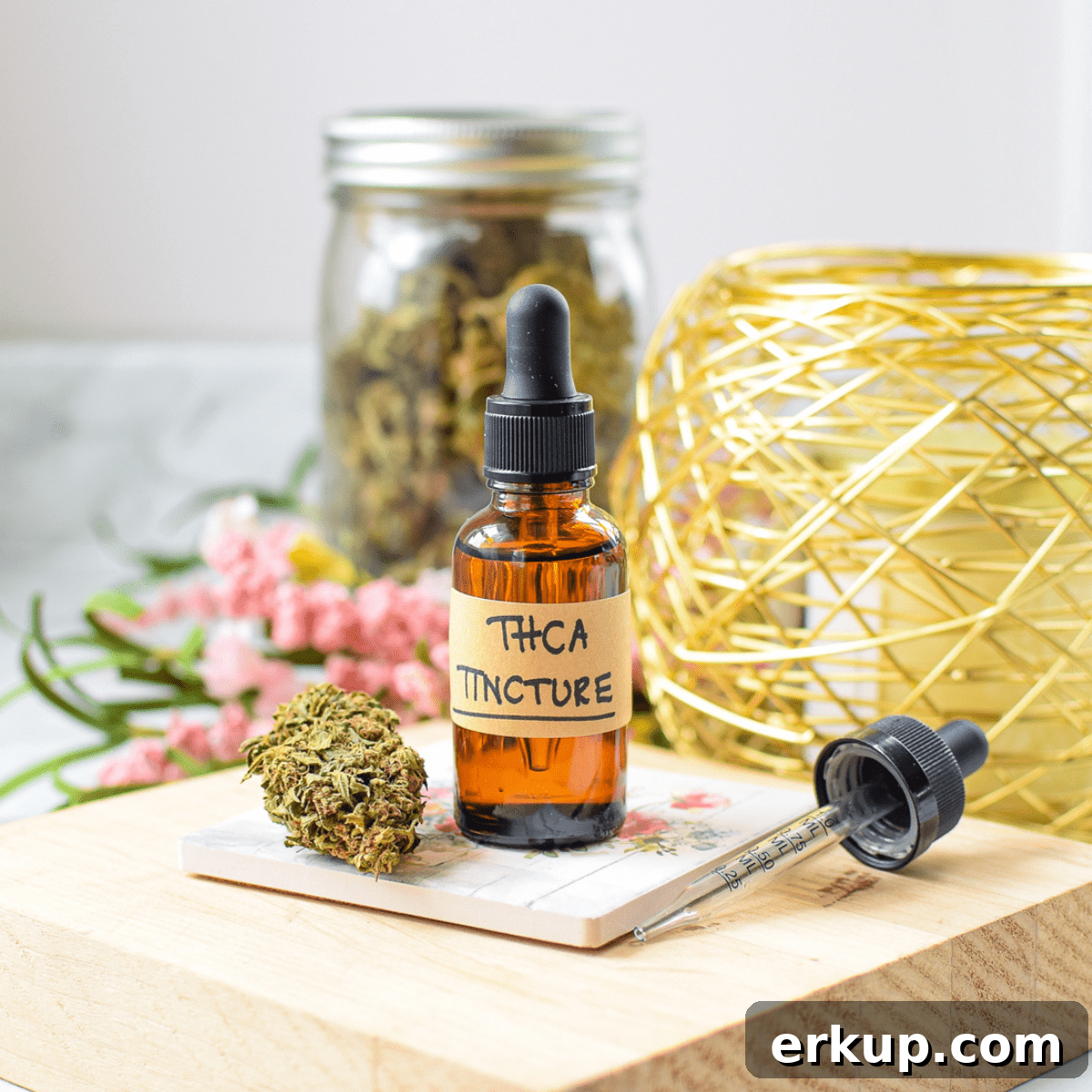
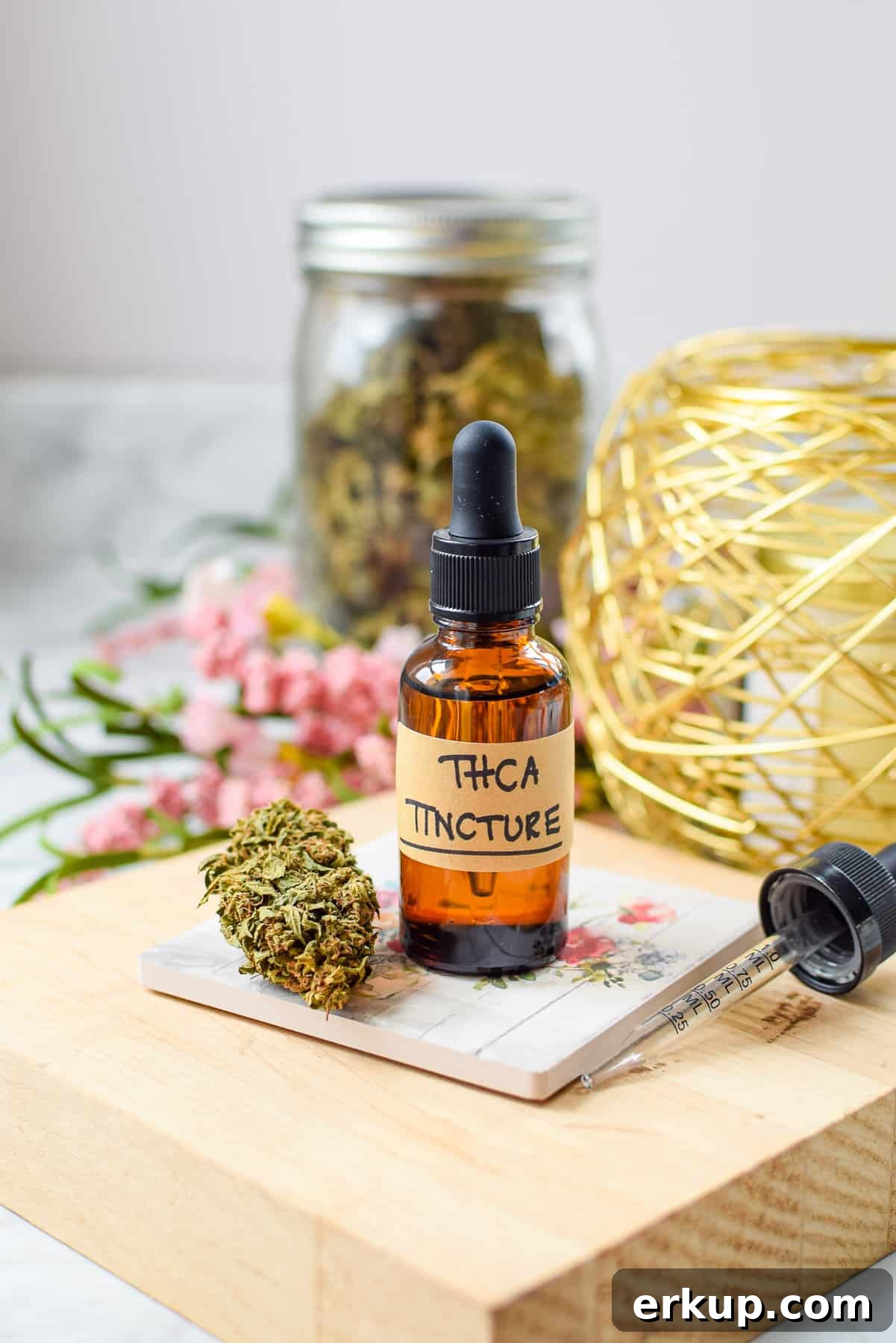
Have you heard of tetrahydrocannabinolic acid, commonly called THCA? It’s the acidic precursor to THC. THCA itself is non-intoxicating — it won’t get you high — yet it may offer several therapeutic benefits. Below you’ll find clear information about THCA and a simple, at-home method for making a THCA tincture.
Article Features
- Just 2 ingredients: THC-dominant cannabis flower (non-decarboxylated) and high-proof grain alcohol.
- Use the result as a sublingual tincture or concentrate it further into full-extract cannabis oil (FECO).
- If you prefer carrier oil for dosing or convenience, consider an MCT or similar neutral oil as an option when ready to blend.
Why you’ll love this tincture
Most people are familiar with THC, the cannabinoid associated with psychoactive effects. In the living cannabis plant, most cannabinoids are produced in their acidic forms. THCA — tetrahydrocannabinolic acid — is the natural, non-psychoactive precursor to THC. When THCA is heated (a process called decarboxylation), it converts to THC.
A THCA tincture preserves the acidic form by avoiding heat during extraction. That means you can access potential therapeutic benefits associated with this compound without the intoxication typically caused by activated THC. For many people seeking the plant’s effects while staying clear-headed, THCA offers an attractive alternative.
What you’ll need
- THC-dominant cannabis flower, dried: Start with non-decarboxylated (raw) dried flower that contains THCA. Use the amount you prefer — from a small 3.5 g batch up to larger quantities. Do NOT decarboxylate if you want to preserve THCA.
- High-proof grain alcohol: Use high-proof neutral alcohol (ideally 150–200 proof). Lower-proof spirits like vodka are less efficient for this cold extraction method.
Note: a concise ingredient list and recipe-style instructions are provided in the recipe section below for easy reference.
Step-by-step process
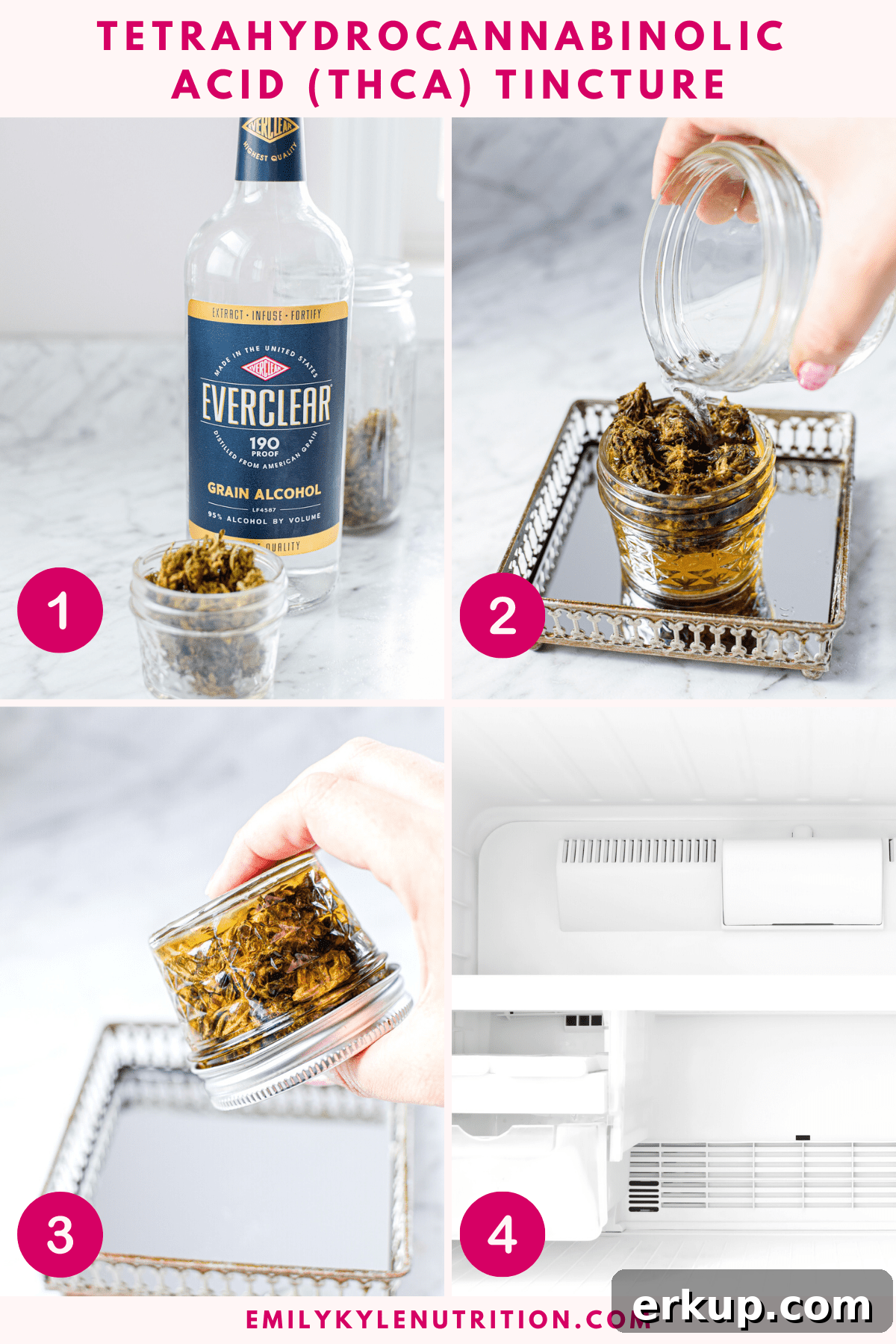
- Step 1 – Place the non-decarboxylated cannabis and the alcohol in the freezer overnight (at least 12–24 hours). Keeping everything cold minimizes conversion of THCA to THC.
- Step 2 – Put the frozen cannabis into a clean mason jar and pour cold high-proof alcohol over it, just enough to fully cover the plant material. Seal the jar tightly.
- Step 3 – Gently invert the jar a few times; do not shake vigorously. Return the jar to the freezer for 5 minutes.
- Step 4 – Repeat the gentle inversion and freeze cycle two more times for a total of three short washes.
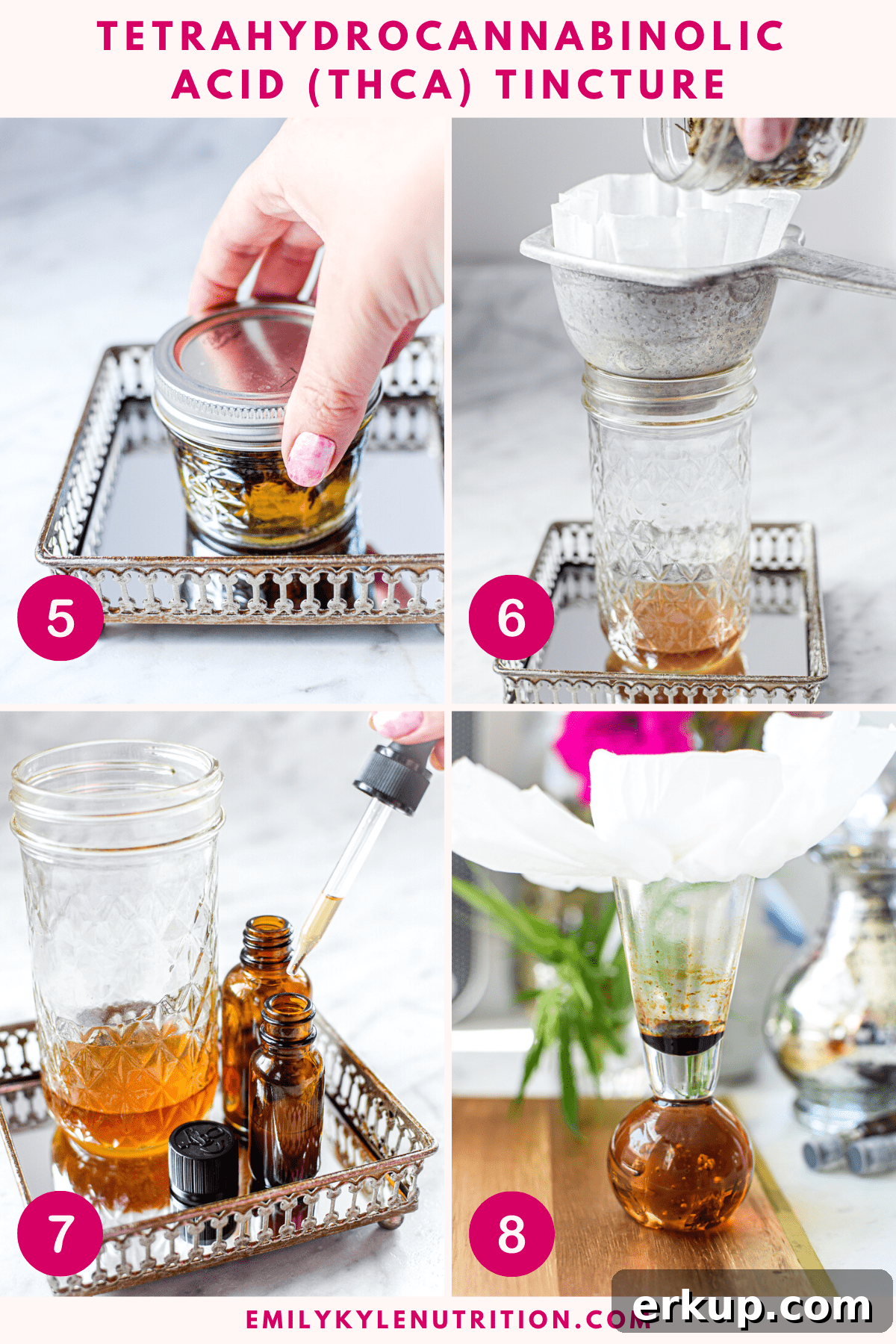
- Step 5 – After the final wash, strain the liquid through a coffee filter or fine mesh into a clean glass container. If desired, perform a second or third filtration to remove fine particulates.
- Step 6 – Store the filtered golden tincture in a dark glass dropper bottle or amber jar. If you want a solvent-free concentrate (FECO), evaporate alcohol using a no-heat method outlined in professional extraction guides to avoid converting THCA to THC.
Note: these steps are written to preserve THCA by avoiding heat. Heating or applying direct flame will decarboxylate THCA into THC.
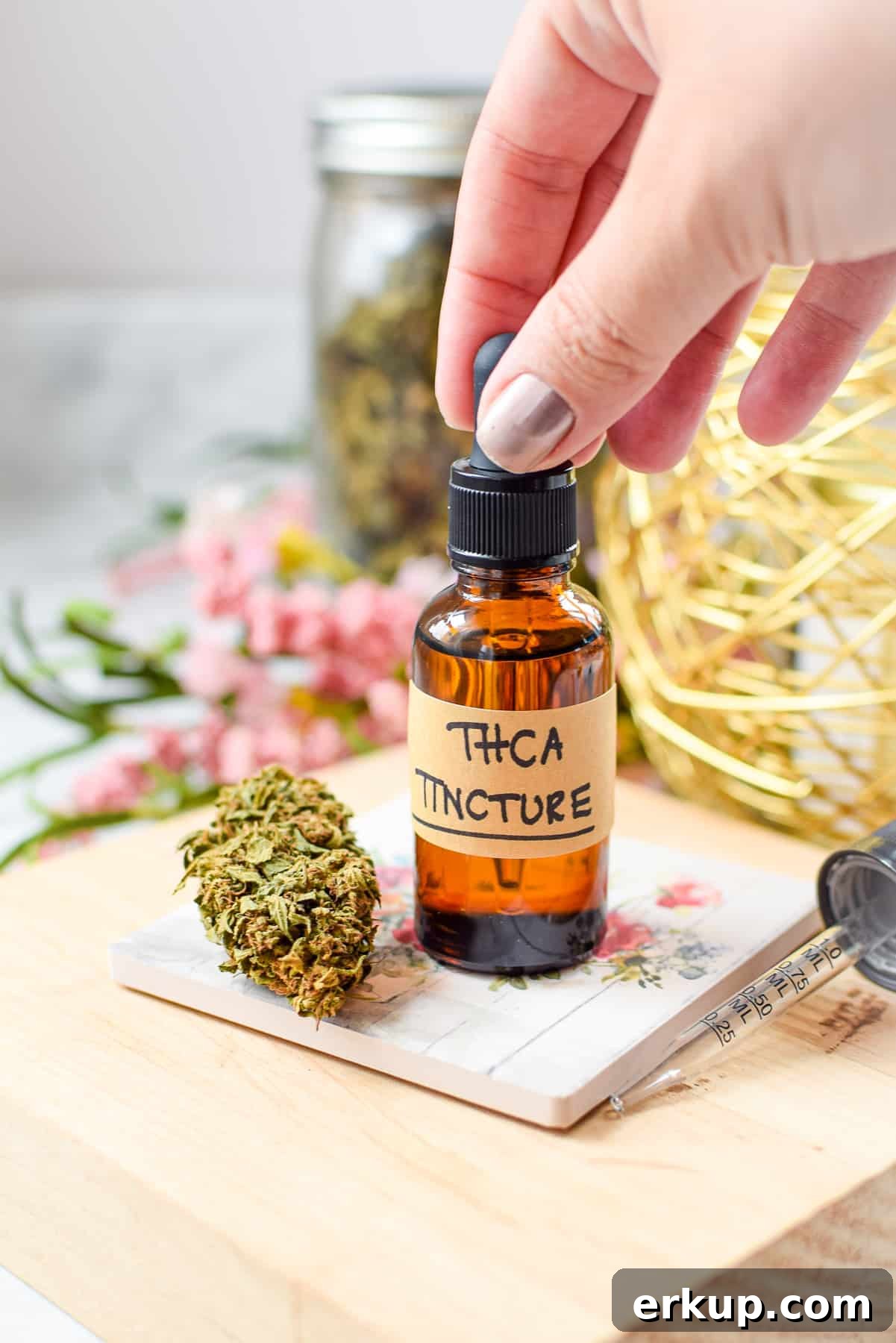
Storage instructions
Store tincture in glass containers, preferably amber or dark glass to limit light exposure. Keep stored in a cool, dark place such as a cupboard, refrigerator, or freezer. Properly stored tinctures can remain usable for months or longer. Always label containers with date and contents for safe use.
Potential benefits of THCA
THCA is the primary acidic cannabinoid in raw cannabis, concentrated in the glandular trichomes on the plant’s flowers. Because THCA is the non-active precursor to THC, it does not produce intoxication on its own. Research and early studies suggest THCA may have anti-inflammatory, analgesic (pain-relieving), and antiemetic (nausea-reducing) properties, though human research is still developing.
Anti-inflammatory
Laboratory and animal studies have identified THCA as an anti-inflammatory agent. Some findings indicate it can influence biochemical pathways linked to inflammation and may act differently than activated cannabinoids. More research is needed to confirm effects and appropriate therapeutic use in humans.
Anti-emetic
Early research also points to THCA’s potential to reduce nausea and vomiting. In some studies, THCA showed anti-emetic activity without the sedative or psychoactive effects associated with THC. This makes THCA an option for users seeking symptom relief while remaining clear-headed.
Because THCA lacks the intoxicating effects of THC, it may be possible to use higher doses of THCA-rich preparations for therapeutic benefit without compromising day-to-day function. Still, individual responses vary, and careful dosing is important.
Recipe: THCA Tincture (basic)
How to Make a THCA Tincture
Preserve the raw acidic cannabinoid THCA with a cold alcohol wash. This method extracts THCA without using heat, producing a sublingual tincture or a solvent-rich extract that can later be concentrated safely if desired.
Ingredients
- 14 grams dried THC cannabis flower (not decarboxylated) — or adjust to smaller amounts (3.5 g recommended for a starter batch)
- Approximately 8 ounces high-proof grain alcohol (enough to cover the cannabis in your jar)
Instructions (condensed)
- Freeze cannabis and alcohol overnight.
- Place frozen cannabis in a jar and pour enough cold alcohol to cover it. Seal tightly.
- Gently invert the jar, return to the freezer 5 minutes, then repeat the gentle shake and freeze cycle two more times (three washes total).
- Strain through a coffee filter into a clean glass container. Repeat filtration if desired.
- Store in an amber dropper bottle. If you plan to concentrate, use a no-heat alcohol evaporation method to avoid converting THCA to THC.
Notes
- Do NOT decarboxylate the flower if you want to retain THCA.
- Only use high-proof grain alcohol for efficient extraction.
- You only need enough alcohol to cover the plant material — excess solvent is wasteful.
- If you’re unfamiliar with extractions or local regulations, proceed cautiously and consult experienced resources or professionals.
Additional info
Course: Extraction • Cuisine: Cannabis infused
Ways to use your tincture
- As a sublingual: place measured drops under the tongue for relatively quick absorption.
- Mixed into small amounts of neutral oil or food for gentler oral dosing.
- Concentrated into FECO if you prefer a nearly solvent-free extract — use a careful, no-heat method.
Start with a low dose and adjust slowly. Because THCA research is evolving, monitor effects and consult a knowledgeable clinician if using it for specific health concerns. Always obey local laws and regulations regarding cannabis and alcohol.