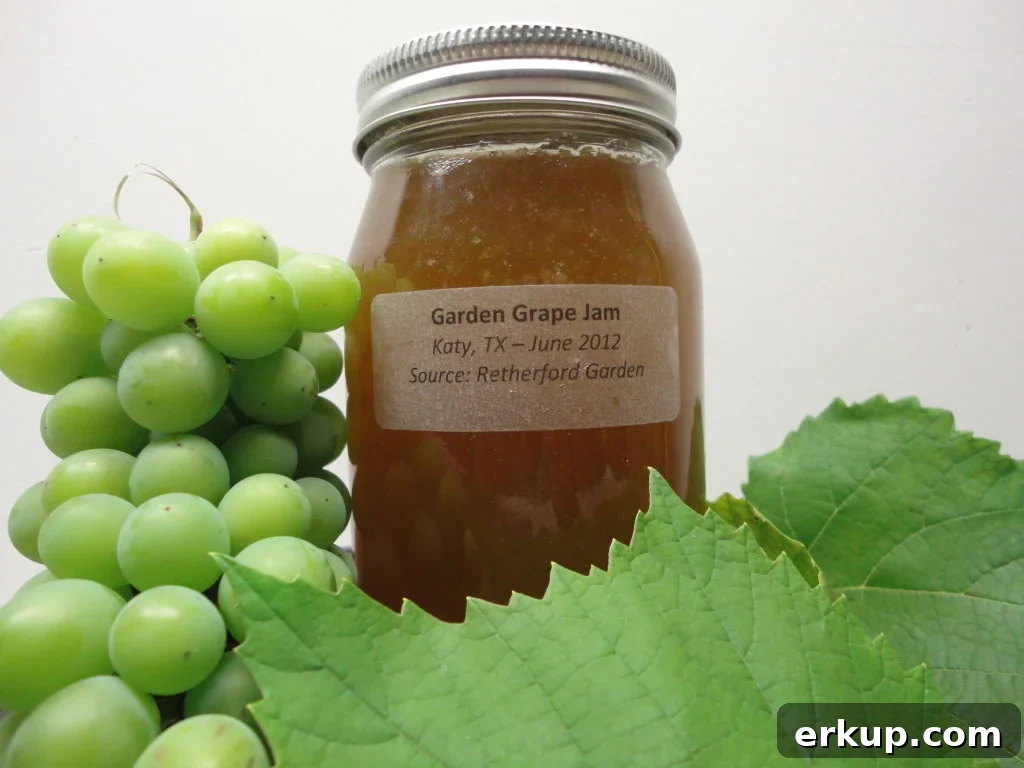
Of all the jams, preserves and marmalades I make, Garden Grape Jam gives me the greatest sense of satisfaction. Unlike other fruits that I source from East Texas, the grapes for this jam come straight from my backyard, which makes each jar feel like a small harvest of home.
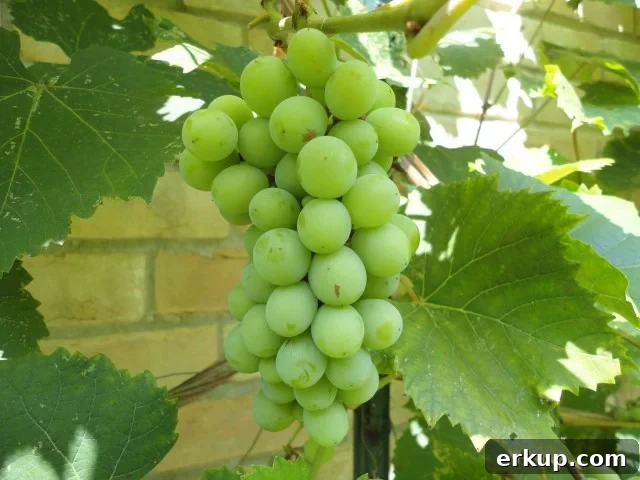
Ripe white grapes on the vine in the yard
Growing grapes in Houston is straightforward, though the fruit is not always of the highest commercial quality. For our purposes, however, the homegrown grapes are perfect for jam. The vine has produced well for the past several years. Early seasons taught me a few lessons: some grapes can be too tart, and homemade vinegar attempts may fail without careful control. Jam, however, has turned out reliably well — tart, flavorful, and balanced when cooked with the right amount of sugar and pectin.
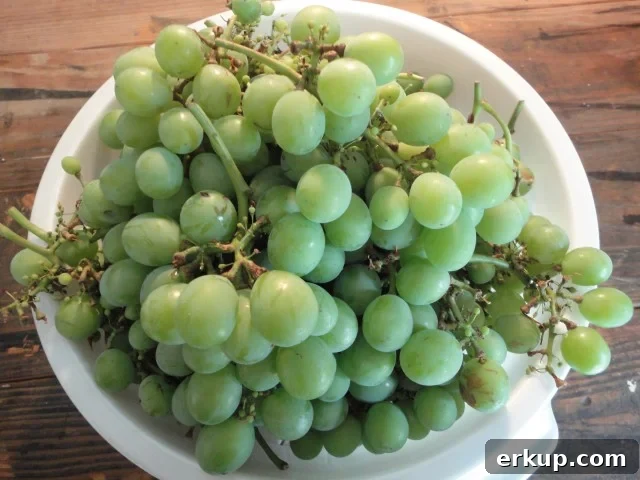
Picked homegrown bunches of white grapes
Making grape jam is straightforward and follows similar steps to other fruit jams. There are a few extra preparation steps for seeded varieties, but the overall time is comparable to other cooked fruit preserves.
Preparing the grapes for jam
Harvest the bunches from the vine. Grapes do not have to be fully overripe; I often pick them a day or two before peak ripeness because the birds tend to find them first. Trim away any obviously damaged, rotted, or infested grapes. Then wash the clusters and remove all grapes from the stems. Keep small or underdeveloped grapes — they will contribute flavor, pectin and body to the jam.
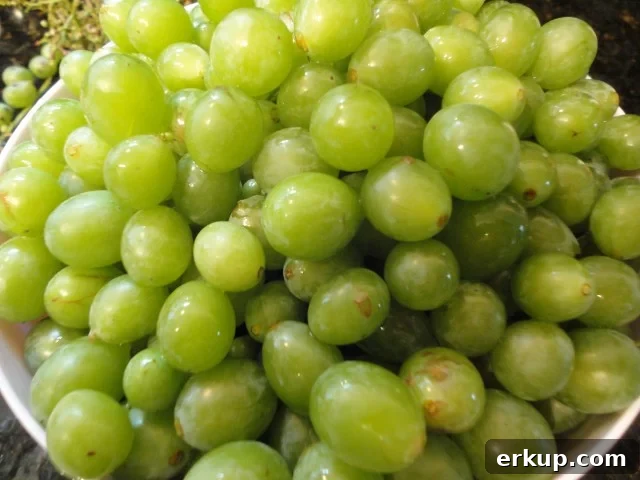
Picked, cleaned and washed homegrown grapes
Place the grapes in a large pot, add about 1/2 cup of water, cover, and bring to a boil over medium-high heat. Stir occasionally and continue boiling until the grapes have burst and released their juice. Remove from heat and let the mixture cool slightly.
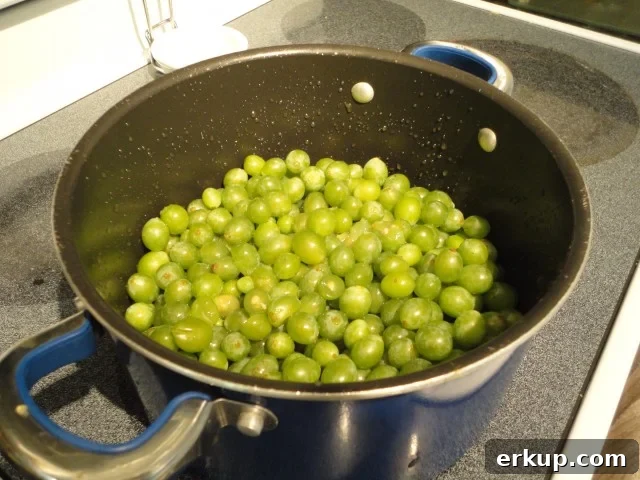
Grapes in a pot, ready to be boiled for jam
If your grapes are seedless, skip the next two steps. For seeded varieties, these steps are important for a smooth, well-textured jam.
Set a wire sieve over a large bowl and pour the cooked grapes through it to separate the juice from seeds, skins and pulp. Use a wooden spoon to press the cooked mixture against the sieve, extracting as much pulp and juice as possible while leaving most of the seeds behind. This process does three things: it increases the usable fruit volume, it adds flavor and texture, and it extracts natural pectin from the skins and pulp to help the jam set.
Some pulp and skin will remain with the seeds. To recover more flavor and pectin, simmer this leftover mash in a small pot with about 1 cup of water until reduced by half, then strain it again and combine the liquid with the primary strained juice.
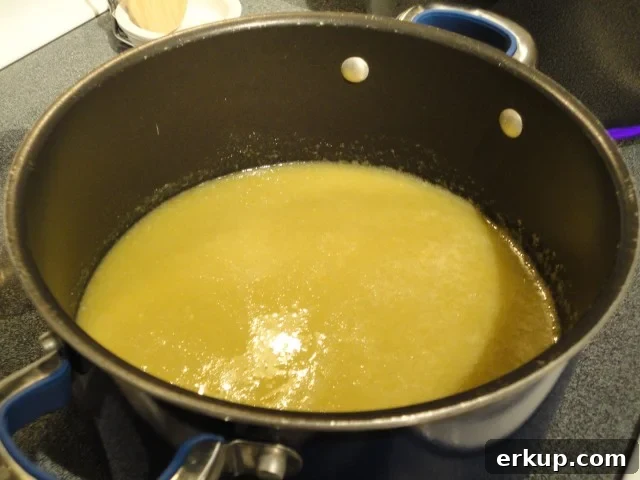
Strained grapes: juice, pulp and some skin
Measure the total volume of prepared grape juice and pulp. The quantity determines how much sugar and commercial pectin you will need. As a guideline for cooked grape jelly (Concord-style), a common ratio is 5 cups prepared juice to 7 cups sugar with one box of pectin, but always follow the instructions on your pectin package for the best results. If you prefer not to work with fractional amounts, you can supplement your juice with a small quantity of store-bought filtered grape juice until you reach a convenient total volume.
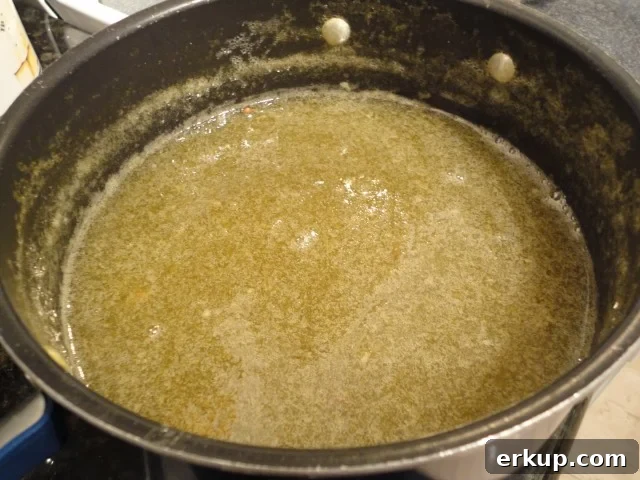
Boiled grape jam with sugar and pectin added, ready for jars
Cook the grape mixture with sugar and pectin according to the pectin manufacturer’s directions for cooked grape jelly or jam. When the jam reaches its set point, ladle it into sterilized jars and process according to your usual canning method. Properly sealed jars will keep several months in a cool, dark place.
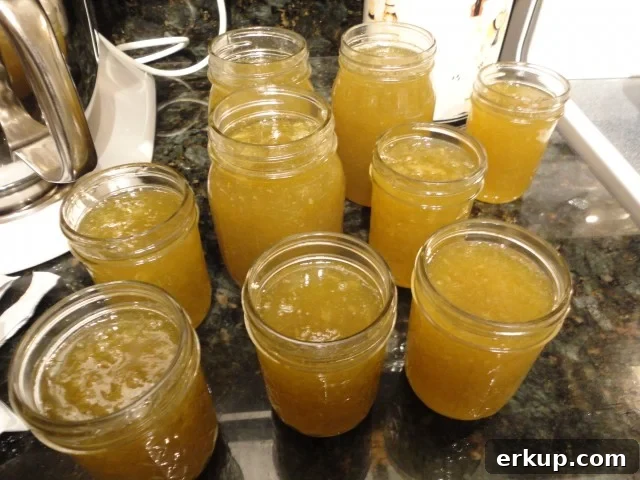
Garden grape jam poured into mason jars
Garden Grape Jam carries the vivid, slightly tart flavor of homegrown grapes. The balance of tartness and sweetness is often a welcome contrast to overly sweet commercial spreads. Serve it on toast, with butter, or as a classic peanut butter and grape jam sandwich. It also complements savory pairings: try it with crackers and sharp cheddar, blue cheese, goat cheese, or manchego for a bright, fruity contrast.
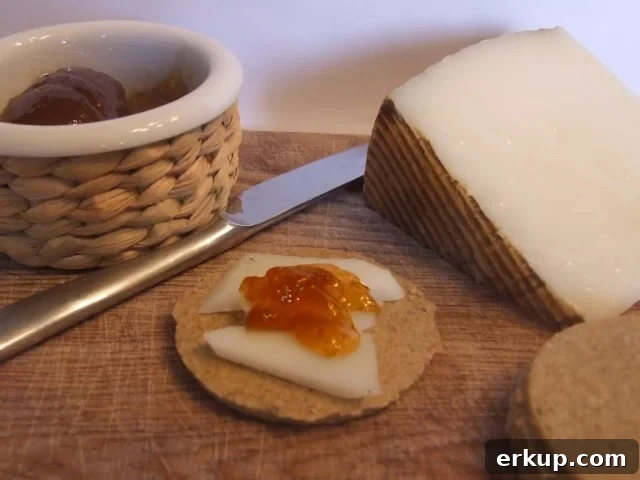
Homemade garden grape jam paired with manchego and oatcakes
Whether you grow your own grapes or use high-quality fruit from a local source, this method yields a bright, flavorful jam that celebrates the season. Garden grape jam is an easy way to preserve the harvest and enjoy the unique taste of homegrown grapes year-round.