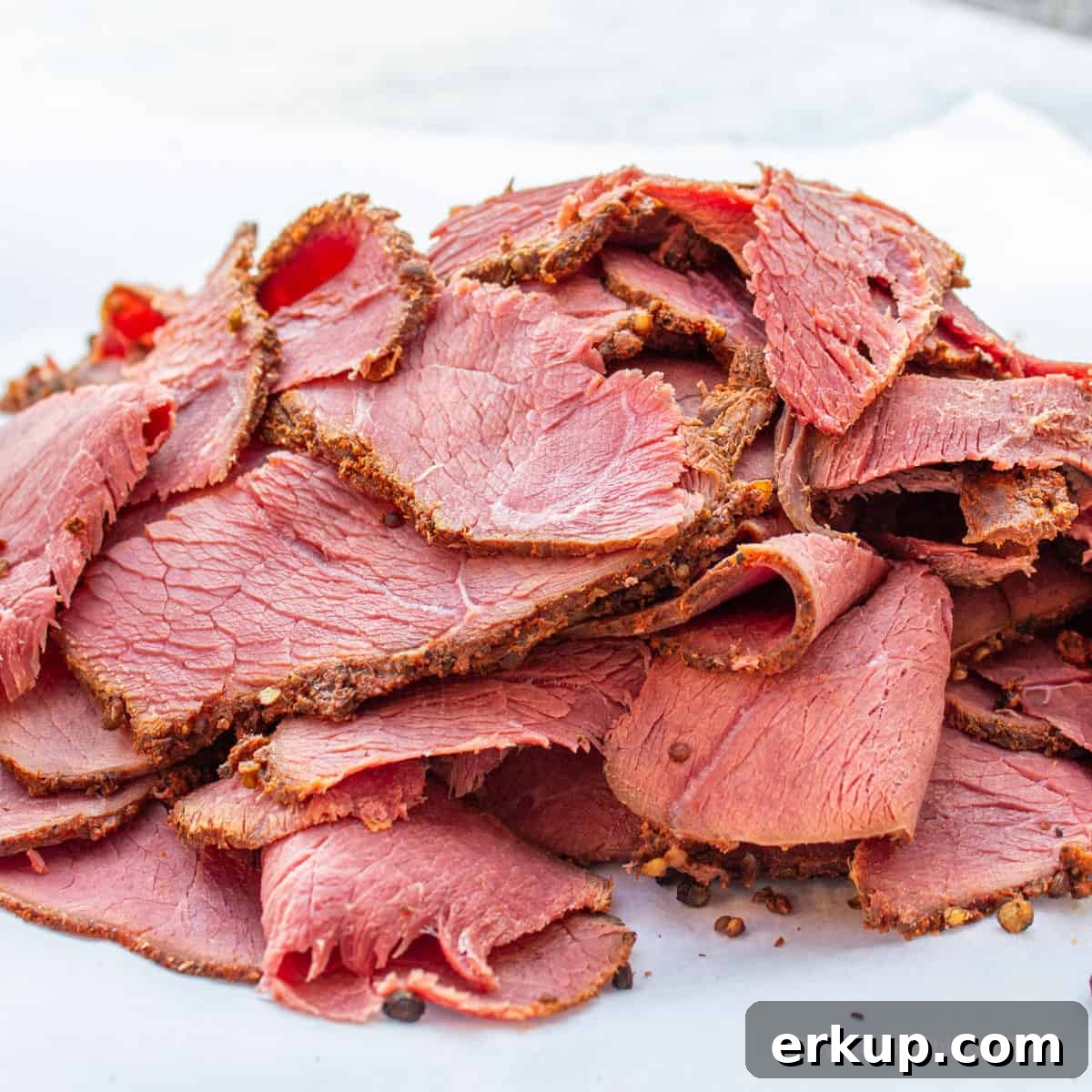
Making pastrami at home is a rewarding from-scratch project that yields rich, deeply flavored meat. Use beef for a classic result, or try venison or elk for a heartier, wild-game variation. The process takes time, but most of it is hands-off: cure the meat, apply a spice rub, smoke it, then steam until tender. Once you try homemade pastrami, you’ll see how accessible and delicious it can be.
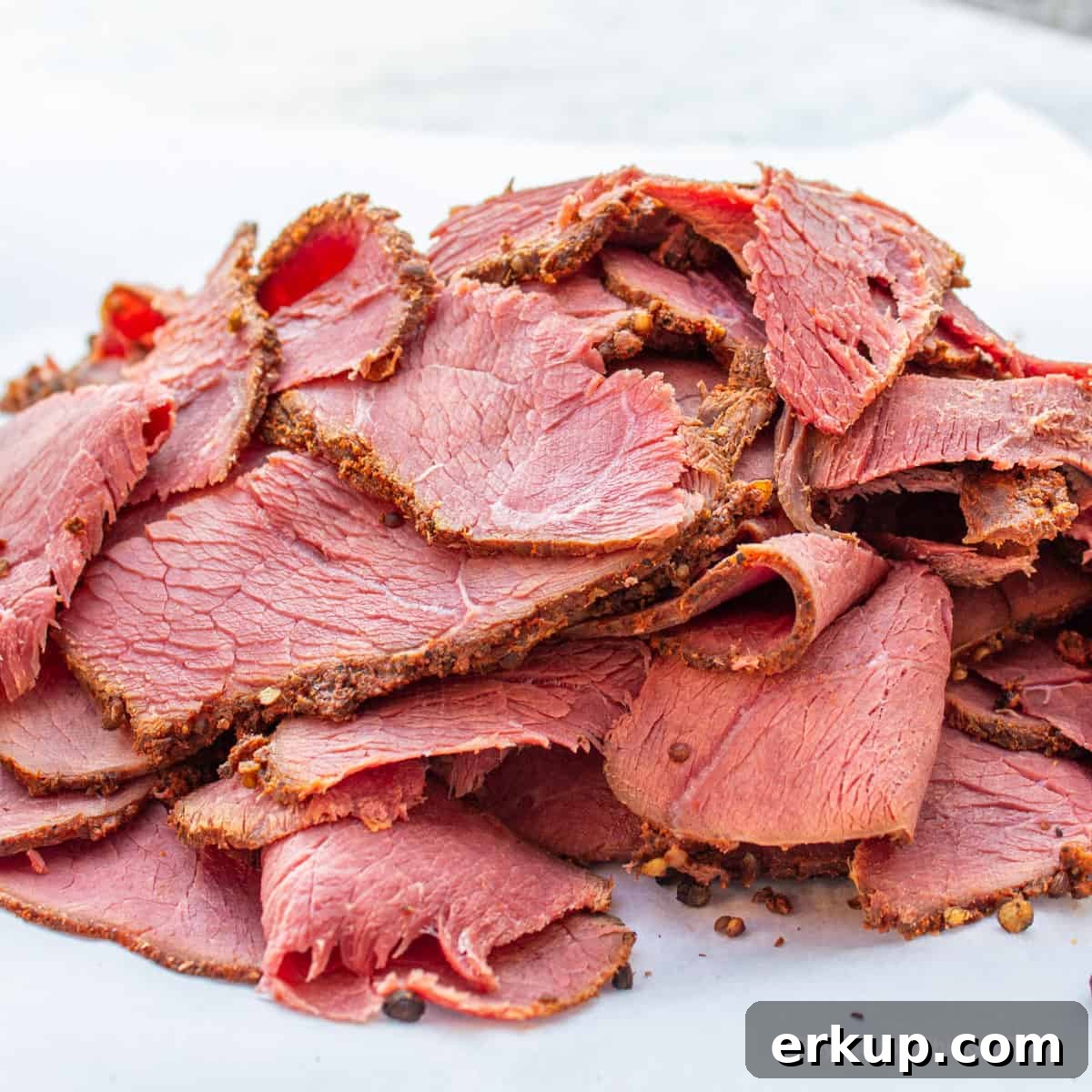
Why make homemade pastrami
Whether you start with a beef brisket or roasts from venison or elk, making pastrami at home turns a simple cut into something special. Curing and smoking concentrate flavor and create a tender, sliceable meat ideal for sandwiches, charcuterie boards, or simple snacking. If you work with wild game, pastrami is an excellent way to transform lean roasts into a flavorful, crowd-pleasing product. Many home cooks make several small roasts in one batch to maximize effort and fridge space.
After curing for several days, the meat is smoked and finally steamed in the oven to finish. Allowing that patience yields slices with deep, developed flavor and a great texture for sandwiches or entertaining. Homemade pastrami also freezes well when sliced and packaged, making it a convenient gift or freezer staple.
Key ingredients
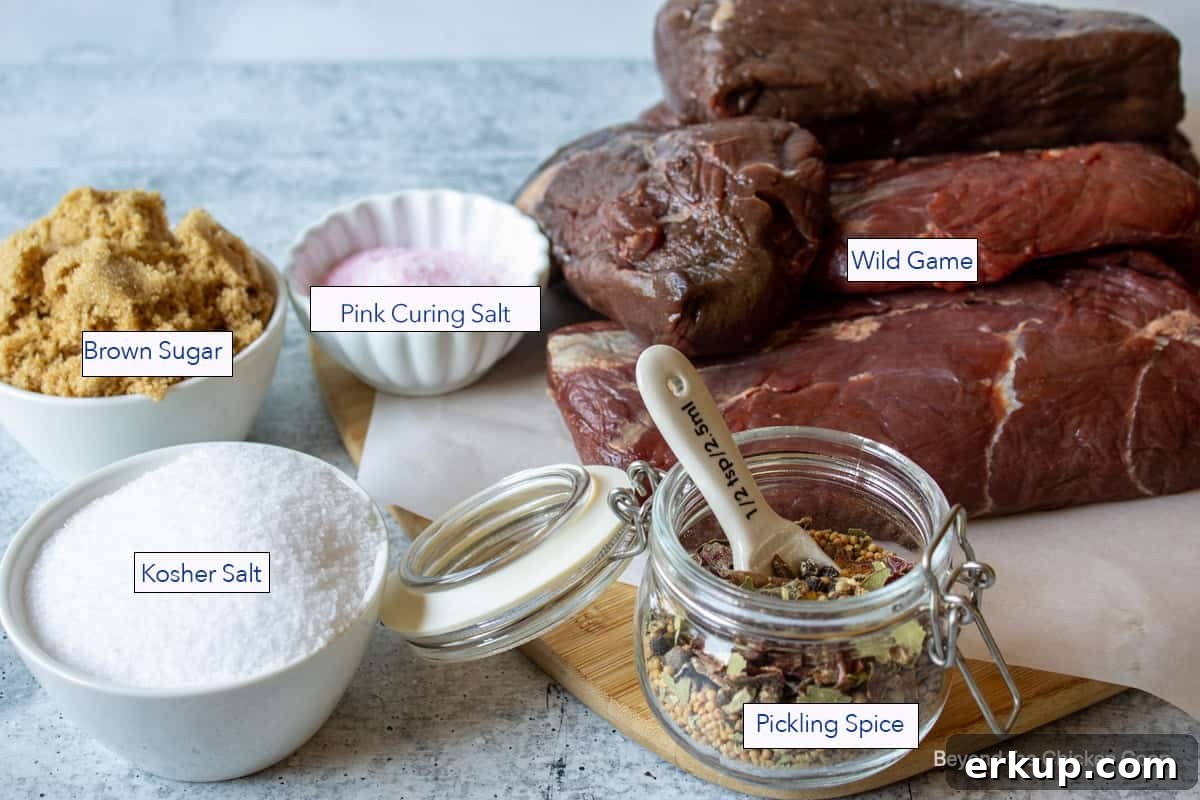
Meat
- Venison, elk, or beef roast – Choose wild game roasts for a distinctive flavor or beef for a traditional pastrami.
Brine
- Pickling spice – Use a store-bought mix or your own blend.
- Kosher salt (or canning salt)
- Pink curing salt (Prague #1) – a curing powder containing sodium nitrite used for short cures; it preserves the meat and helps with color. Be sure to use Prague #1 and not Prague #2.
- Brown sugar – balances salt and spices and adds depth during curing.
Rub
- Coriander seeds
- Mustard seeds
- Black peppercorns
- Smoked paprika
- Garlic powder
Making homemade pastrami
The process breaks down into four main steps: brine (cure), rub, smoke, and steam. Each step is described below.
Brine
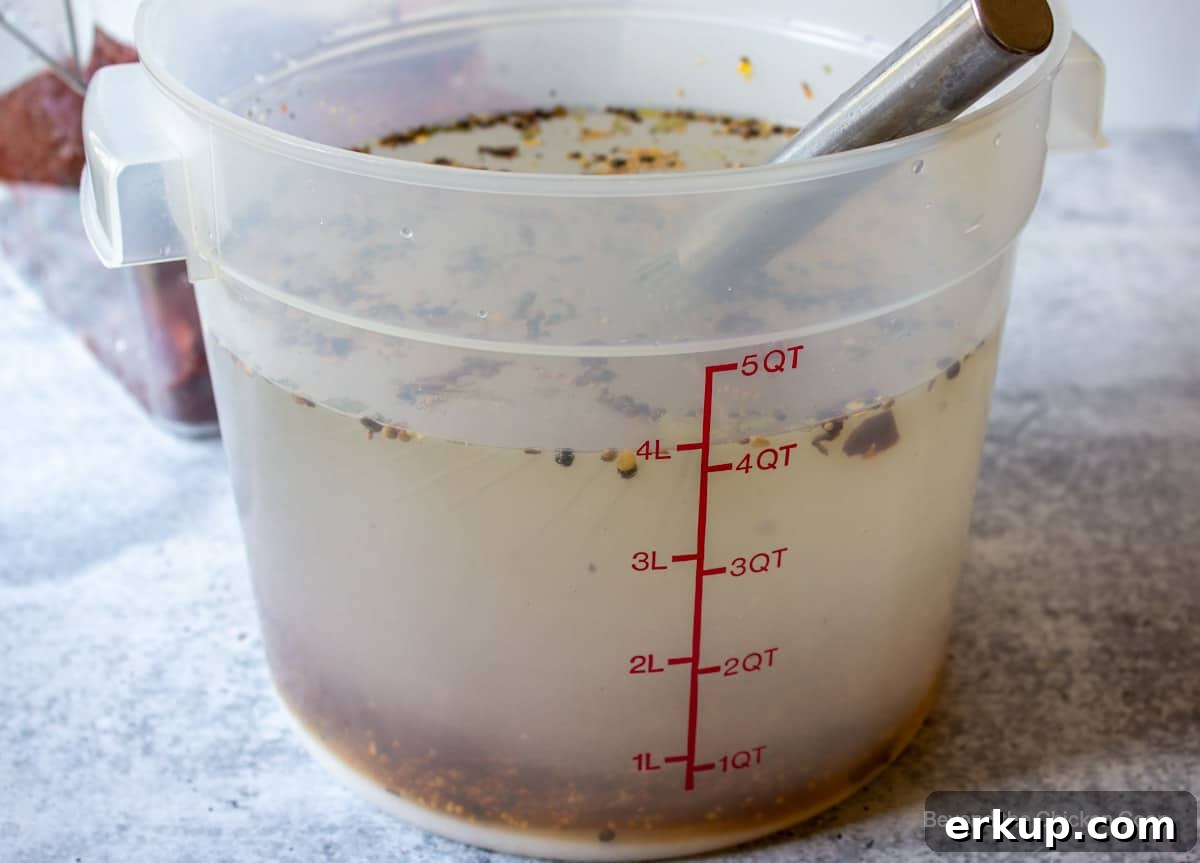
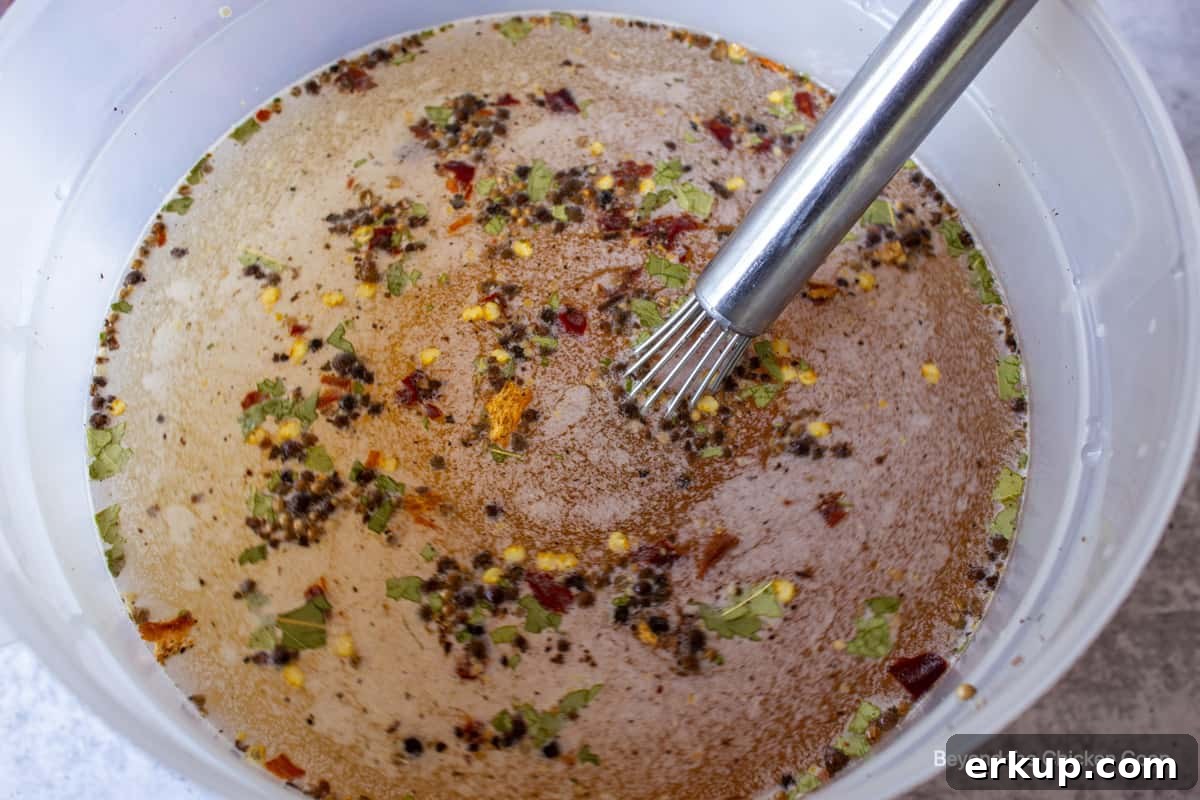
- Combine pickling spice, kosher salt, pink curing salt, brown sugar, and water in a large container. Stir until the salts and sugar dissolve. If needed, stir again after a few minutes to ensure everything is fully incorporated.
- Place the roasts in a container and pour the brine over them so the meat is completely covered. Cover and refrigerate for 5–7 days for a proper cure. Turn the meat once on day 3 or 4 to ensure even curing.
- After curing, discard the brine. Rinse each roast thoroughly to remove surface spices, then soak in fresh cold water for 2–3 minutes and discard that water. Place the meat on a baking sheet and pat dry on all sides.
Rub
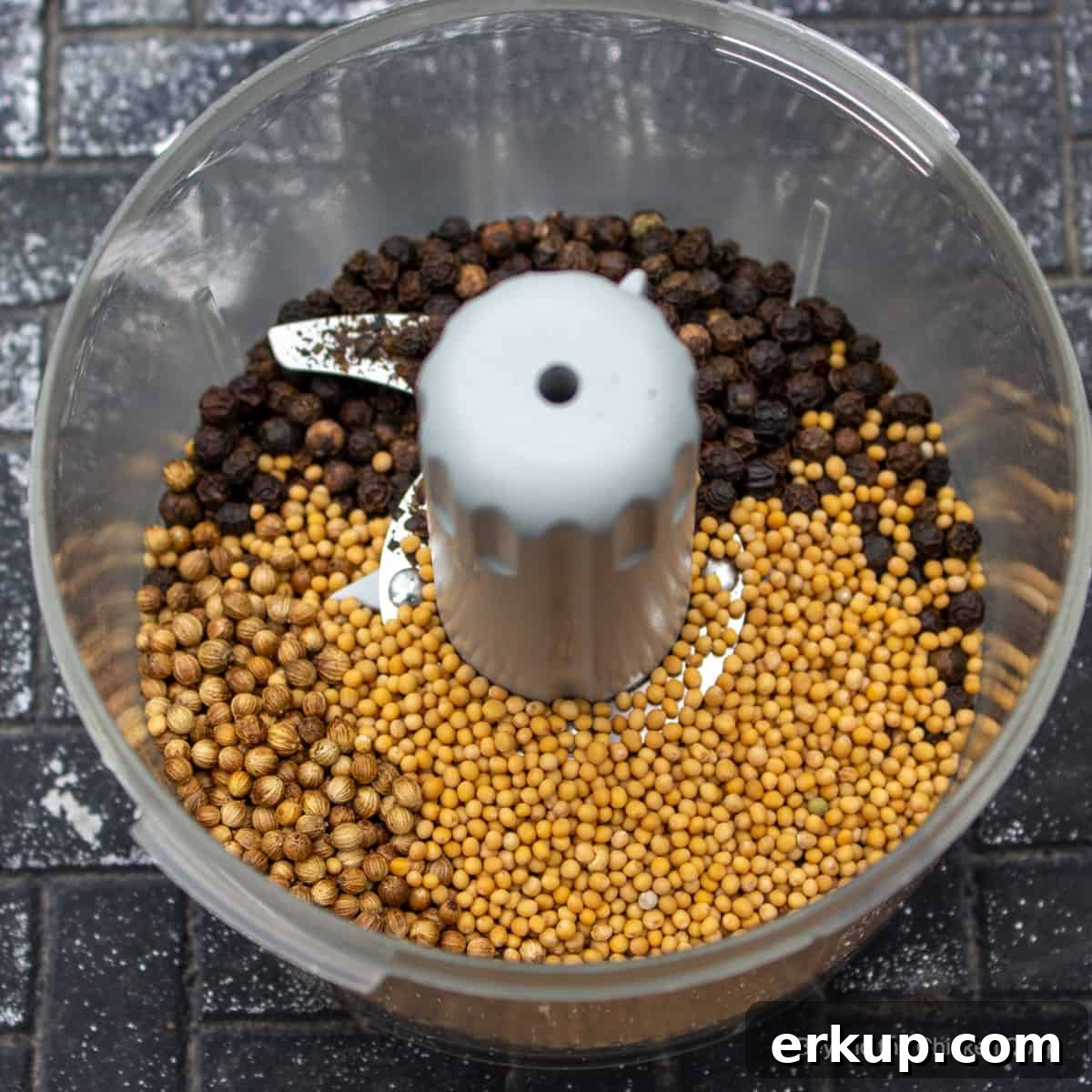
- To make the rub, place peppercorns, coriander seeds, and mustard seeds in a spice grinder or food processor. Pulse briefly so the seeds break up but are not pulverized.
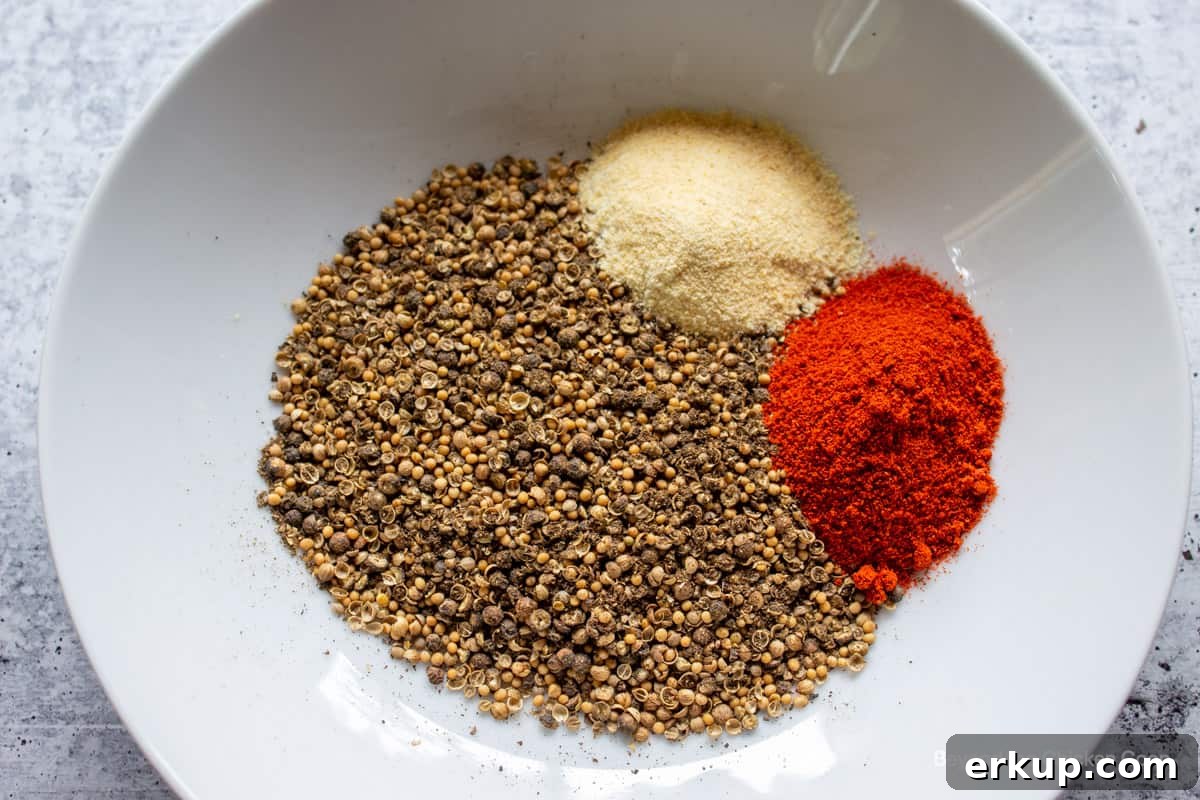
- Mix in smoked paprika and garlic powder, then press the spice mixture all over the meat so each surface is well coated.
Smoke
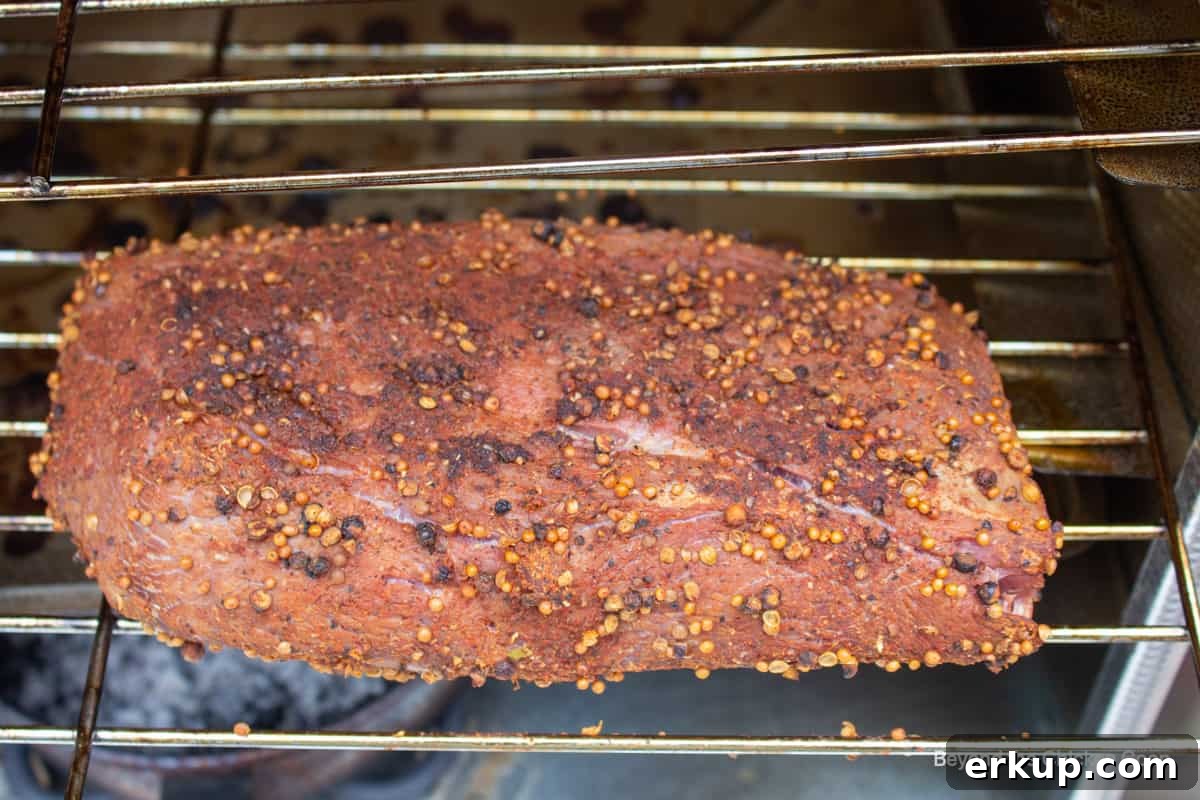
- Arrange the rubbed roasts on smoker racks and insert a thermometer into the center of the largest piece to monitor internal temperature.
- Set the smoker to about 160°F and add a pan of wood chips (alder or apple wood work well). When the first pan’s smoke dissipates (about an hour), add a second pan of wood chips. Avoid over-smoking—two pans is usually enough.
- Smoke until the internal temperature reaches 145°F. Depending on smoker performance and roast size, this will typically take 4–6 hours.
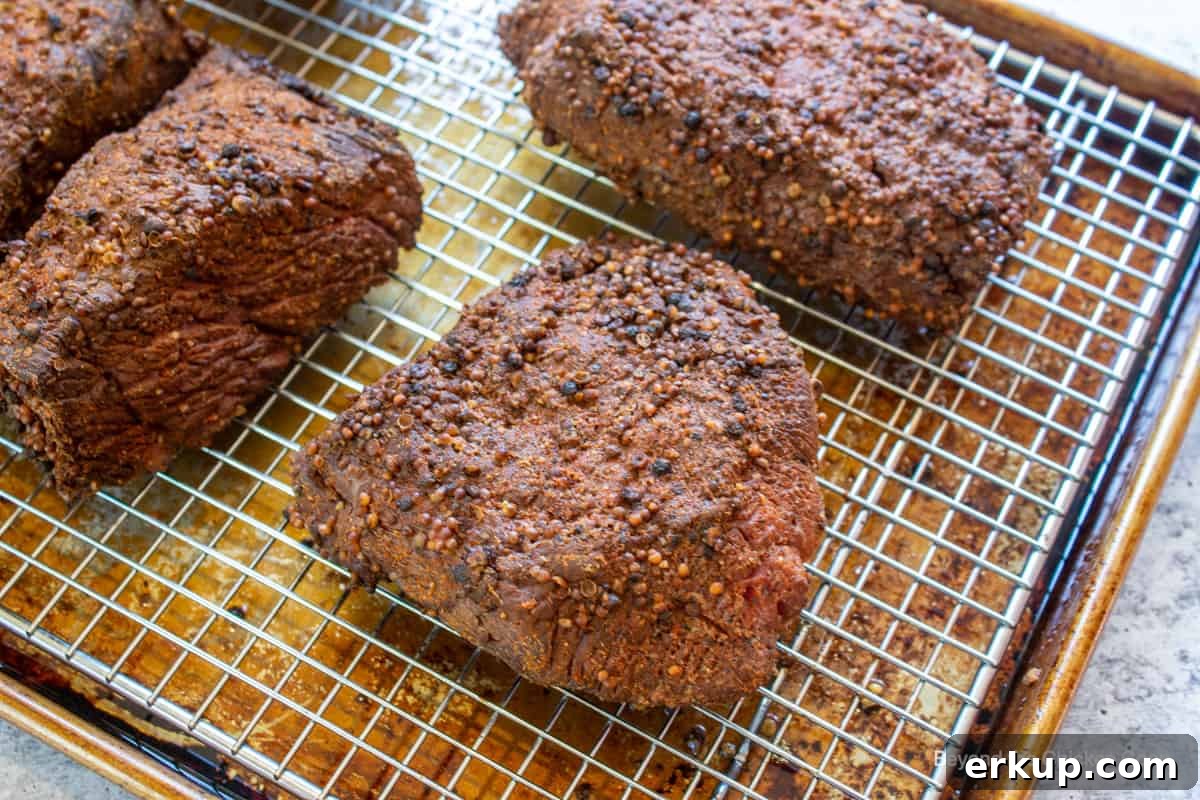
- When the roasts reach 145°F, remove them from the smoker and place them on a baking rack over a cookie sheet.
Steam
- Preheat the oven to 275°F. Place the baking rack with the roasts over a cookie sheet or baking pan.
- Carefully pour hot tap water into the baking sheet so it fills about halfway; this will create steam during baking. Tightly wrap the meat and pan with aluminum foil so steam cannot escape.
- Place the wrapped pan in the oven and bake for 1 hour. After baking, let the pan sit covered for 10–15 minutes, then remove the foil carefully to avoid escaping steam.
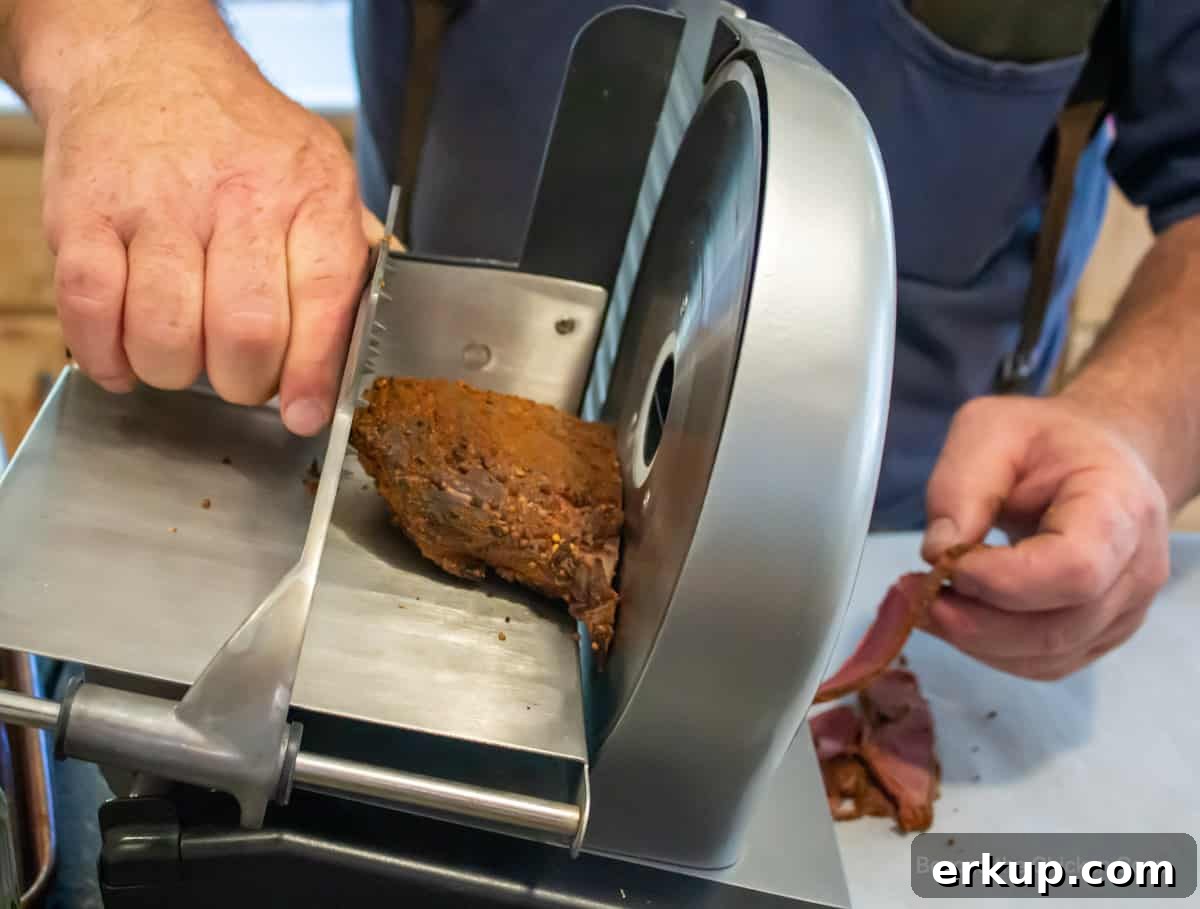
- Allow the meat to cool before slicing thinly across the grain. Serve immediately or cool and store.
Recipe tips
- Read the entire recipe before you start; there are several stages and some prep planning required.
- Prepare multiple small roasts at once if you have the space; the same amount of brine will accommodate several 1-pound roasts.
- Plan for the size of the brining container and the refrigerator space needed for several days of curing.
- If salts or sugars seem slow to dissolve, stir well, let the mixture rest for five minutes, then stir again until fully dissolved.
- Brine for 5–7 days; this window gives flexibility for scheduling smoking and steaming.
- Smoking time varies by smoker and roast size—monitor the internal temperature rather than relying on a fixed time.
- When slicing for sandwiches, always cut across the grain for the most tender mouthfeel.
Equipment
The following equipment is helpful but not mandatory; substitute what you already own when possible.
- 6-quart covered container (for brining)
- Large mixing container or tub
- Spice grinder or small food processor
- Smoker (or grill set up for indirect smoking)
- Wood chips (alder or apple)
- Digital meat thermometer
- Cooling rack and cookie sheet
Recipe FAQs
How long will homemade pastrami last?
Store sliced pastrami in the refrigerator and plan to consume it within about 10 days. You can also freeze pastrami at 0°F for best quality for 2–3 months; properly wrapped, it will remain safe beyond that but may lose some moisture over time.
What other meats can I use to make pastrami?
Traditional pastrami is made from beef brisket, but roasts from venison, elk, moose, antelope, or bison all make excellent pastrami when cured and smoked using this method.
Serving suggestions
Sliced pastrami is versatile. Use it any way you would other deli meats:
- Add to a meat-and-cheese tray for entertaining
- Make hot sandwiches or breakfast sandwiches with eggs
- Enjoy with cheese and crackers for a simple snack
- Make a grilled sandwich with sauerkraut and Swiss cheese for a classic pairing

More smoked recipes
If you enjoy smoking meats, try other preserved or smoked creations such as homemade bacon or smoked fish recipes. Smoking transforms simple ingredients into rich, memorable dishes.

If you make this recipe, I’d love to hear about it! Leave a comment and share a photo.
Homemade Pastrami — Recipe Overview
Author: Kathy Berget
Summary: Cured, seasoned, smoked, and steamed pastrami made with beef or wild game. Slice thin for sandwiches, platters, or snacking.
- Prep time: ~30 minutes (plus brine time)
- Brine time: 5–7 days
- Cook/smoke time: about 4–6 hours to reach 145°F, plus 1 hour steaming
- Total time: about 5 days and 8½ hours (including brining)
- Yield: 4–5 pounds of finished roasts (approx.)
- Calories: about 41 kcal per slice/ounce (estimate)
Ingredients
Meat
- 4–5 pounds beef or venison roast (several smaller 1-pound roasts work well)
Brine
- 1 gallon water
- 1 cup kosher salt
- ¾ cup brown sugar
- 3 tablespoons pickling spice
- 2 tablespoons pink curing salt (Prague #1)
Rub
- 2 tablespoons black peppercorns
- 1 tablespoon coriander seeds
- 1 tablespoon mustard seed
- 1 tablespoon garlic powder
- 1 tablespoon smoked paprika
Instructions
Brine
- Combine water, kosher salt, brown sugar, pickling spice, and pink curing salt in a large container. Stir until dissolved.
- Place roasts in a container and pour brine over them so all meat is covered. Cover and refrigerate for 5–7 days, turning once on day 3 or 4.
- Remove meat from brine, discard brine, and rinse each roast to remove surface spices. Soak in fresh cold water for 2–3 minutes and discard the soak water.
- Place the meat on a baking rack and pat dry with paper towels.
Rub
- Pulse peppercorns, coriander, and mustard seeds in a spice blender until coarsely broken.
- Stir in garlic powder and smoked paprika, then rub the spice mix evenly over all sides of the meat.
Smoke
- Place meat on racks in your smoker and insert a thermometer into the center of the largest roast.
- Set smoker to 160°F and add one pan of wood chips. When smoke dissipates (about an hour), add a second pan.
- Smoke until the internal temperature reaches 145°F (about 4–6 hours, depending on size and smoker).
- Remove the meat and set it on a baking rack over a cookie sheet.
Steam
- Preheat oven to 275°F. Pour hot tap water into the cookie sheet to fill it about halfway and create a steam tray.
- Wrap the meat and pan tightly in aluminum foil to trap steam, then place in the oven.
- Bake for 1 hour. Remove from oven and let sit, covered, for 10–15 minutes. Carefully remove foil and allow meat to cool before slicing.
- Slice thin across the grain and serve.
Notes
- Read through the entire process before starting to ensure you have the right containers and refrigerator space for brining.
- Brine quantity is sufficient for multiple small roasts; adjust container size but not brine proportions.
- Monitor internal temperature rather than relying on a set smoking time.
- Two pans of smoking wood are usually enough; more can overpower the meat.