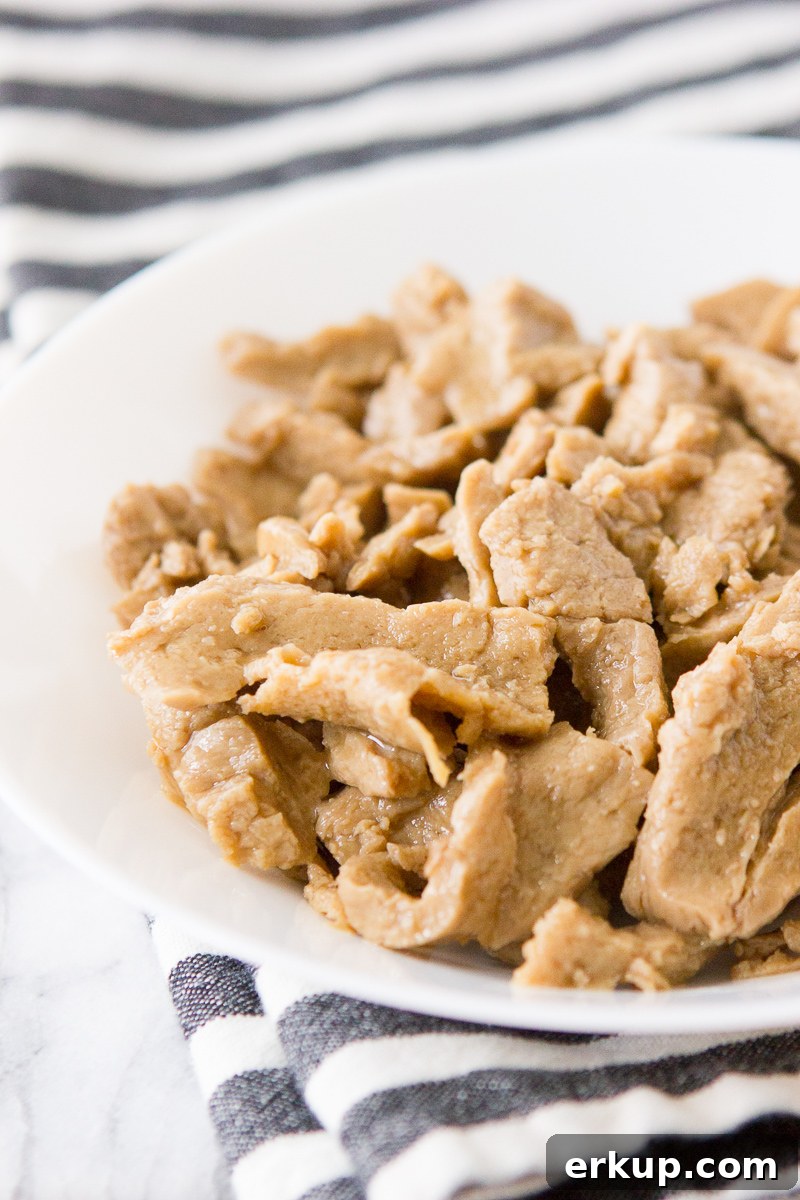
Even if you’re new to vegetarian cooking, you’ve likely heard of tofu and maybe tempeh. But seitan is less familiar to many home cooks, even though it’s a versatile and flavorful plant-based protein worth knowing.
Seitan is essentially wheat gluten that’s been prepared and cooked to create a dense, chewy texture with a savory, meaty bite. In many Chinese restaurants the item labeled “mock duck” or similar dishes is often made from seitan. Its firm texture and ability to absorb marinades and sauces make it an excellent substitute for meat in a wide range of recipes.
Because seitan is made from wheat gluten, it’s not suitable for people with celiac disease or those who are highly sensitive to gluten. For everyone else, seitan can be a satisfying option for adding protein and substance to meals. It’s commonly sold ready-made in natural food stores, found as flavored loaves, strips, sausages, or available as vital wheat gluten powder if you prefer to make it at home.
One of the reasons cooks like seitan is its adaptability. It can be simmered, baked, steamed, fried, or grilled, and it takes on the flavors you use in preparation. You can buy pre-seasoned seitan, but making it at home lets you control the seasoning and texture—yielding anything from a tender roast-style loaf to a firm, steak-like slice.
If you’re new to working with seitan, here are a few practical cooking tips: slice it, tear it, crumble it, or leave it whole depending on the dish. Crumbled seitan makes a great substitute for ground meat in chili, Bolognese-style sauces, or taco fillings. Sliced or chunked seitan works beautifully in stir-fries, curries, sandwiches, and stews. I often brown slices in a skillet with a little oil to develop color and add a few tablespoons of sauce—barbecue, teriyaki, or a rich gravy—to finish the dish.
Seitan doesn’t require pre-cooking to be safe, since it’s typically prepared during manufacturing or when you make it from vital wheat gluten. Still, browning or briefly pan-frying it enhances the texture and flavor. It also holds up well to longer cooking times, so it can replace meat in slow-simmered recipes without falling apart.
For home cooks who avoid soy, seitan offers a soy-free source of concentrated protein and a satisfying chew that many plant-based eaters miss when cutting out meat. Use it ounce-for-ounce in recipes as a starting point, then adjust seasonings and cooking time to suit the texture you want.
Seitan is also a great canvas for DIY meat alternatives. You can transform it into jerky, pepperoni-style slices, sausages, or spiced chorizo-like ribbons by adjusting the spice mix, smoking or baking it, and using different methods to achieve the desired dryness or firmness.
When storing seitan, keep fresh or refrigerated products tightly wrapped and use them within the manufacturer’s recommended timeframe. Homemade seitan can be stored in the fridge for several days or frozen in portions for longer-term use. If you buy vital wheat gluten and prepare seitan yourself, you’ll find it’s an economical and flexible option.
Below are recipe ideas that showcase seitan across cuisines and cooking styles. Each recipe highlights a different way to prepare or season seitan, from quick weeknight meals to show-stopping roasts for special occasions.
Try Cooking with Seitan in These Recipes
Vegan Mongolian Beef from Connoisseurus Veg
Stuffed Vegan Seitan Roast in Puff Pastry from Purple Avocado
Loaded Vegan “Chicken” Noodle Soup from From My Bowl
Seitan Marsala with Smashed Potatoes and Broccoli from Wicked Healthy
Cheeseburger Pizza from Seitan Beats Your Meat
Seitan Portobello Beef Stew from Well Vegan
Vegan Seitan Carne Asada Tacos from The Curious Chickpea
High Protein Vegan Burgers from Full of Plants