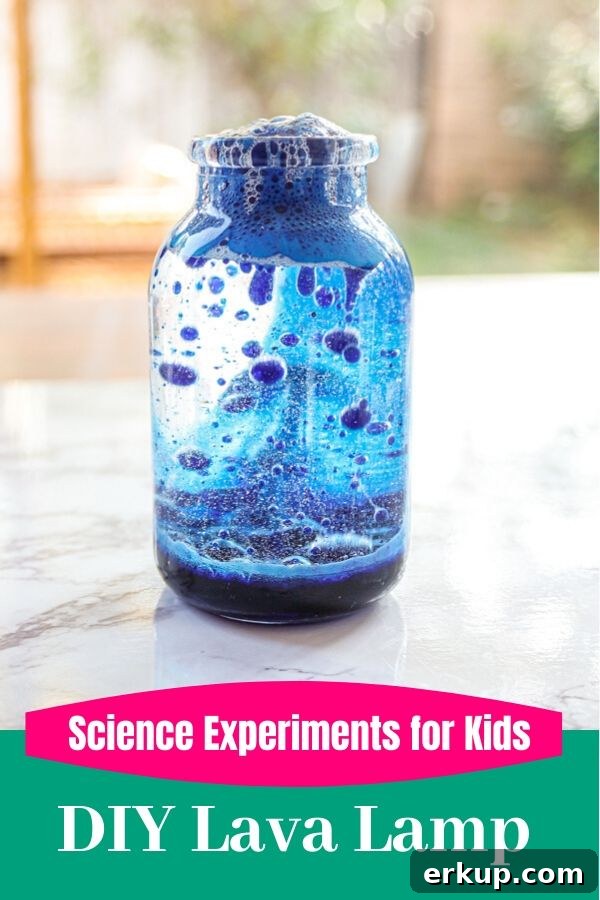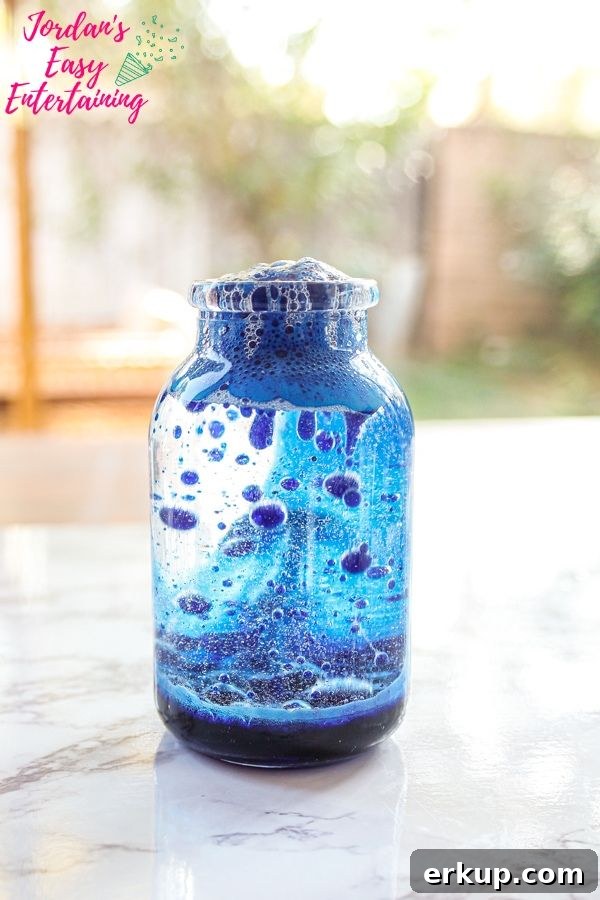
If you are looking for a fun summer science project for kids, try this DIY lava lamp — a simple, safe, and visually captivating experiment you can make at home.
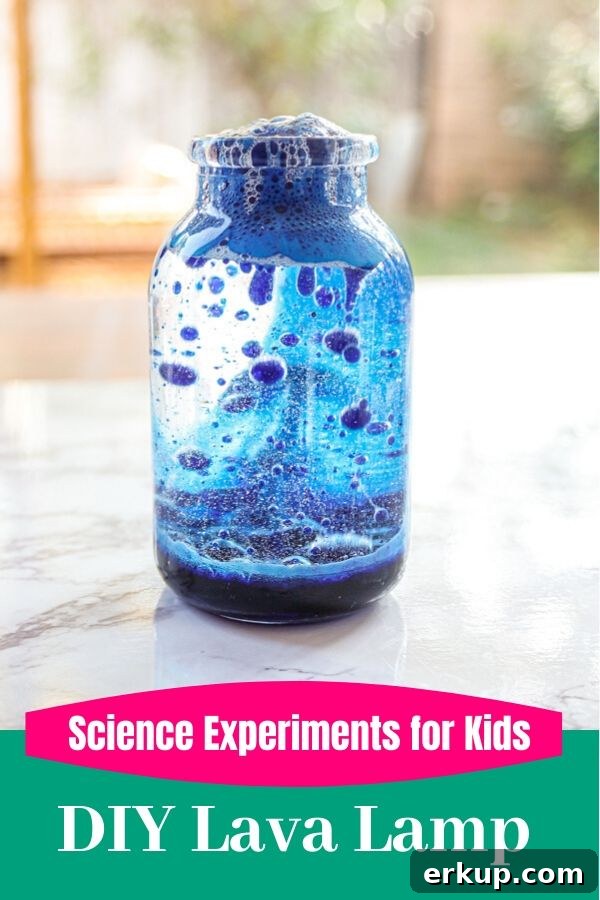
We planned this activity for science week during our virtual summer camp series, and it has become a favorite. Technically it’s not a lamp, but the rising and falling colorful blobs inside remind everyone of a classic lava lamp. The project is hands-on, quick to set up, and perfect for curious kids who love to watch chemical reactions and physical processes in action.
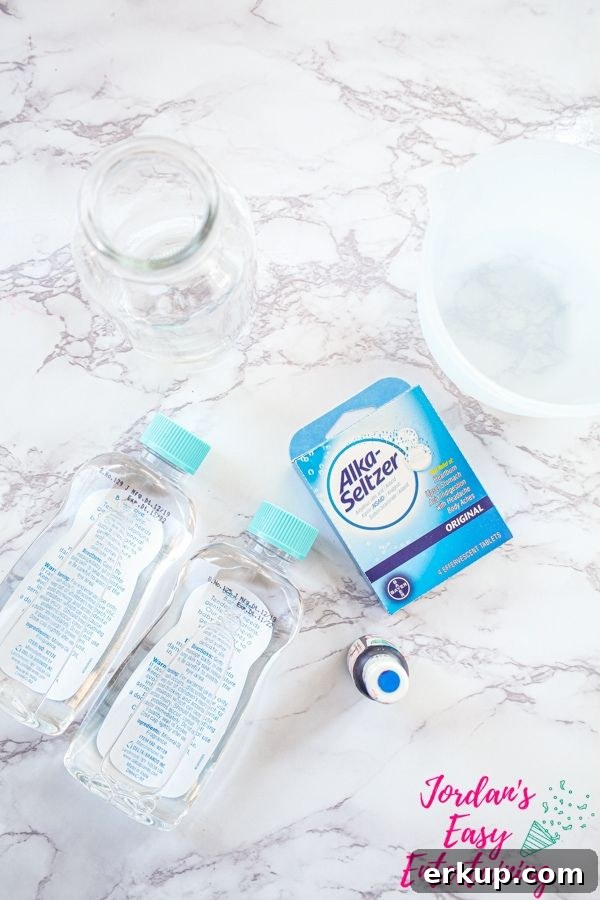
DIY Lava Lamp Supplies
- A clear jar or bottle (glass or plastic)
- Water
- Liquid food coloring
- Clear oil (baby oil or vegetable oil work well)
- Alka-Seltzer tablets (or similar effervescent antacid)
How to Make a DIY Lava Lamp
These DIY lava lamps are simple to assemble and fun to watch. Follow these steps:
- Fill the jar about one-quarter full with water.
- Add one or two drops of food coloring to the water and stir gently. The color will stay in the water layer because food coloring is water-based.
- Pour oil into the jar until there is about an inch of space left at the top. The oil will form a separate layer above the colored water.
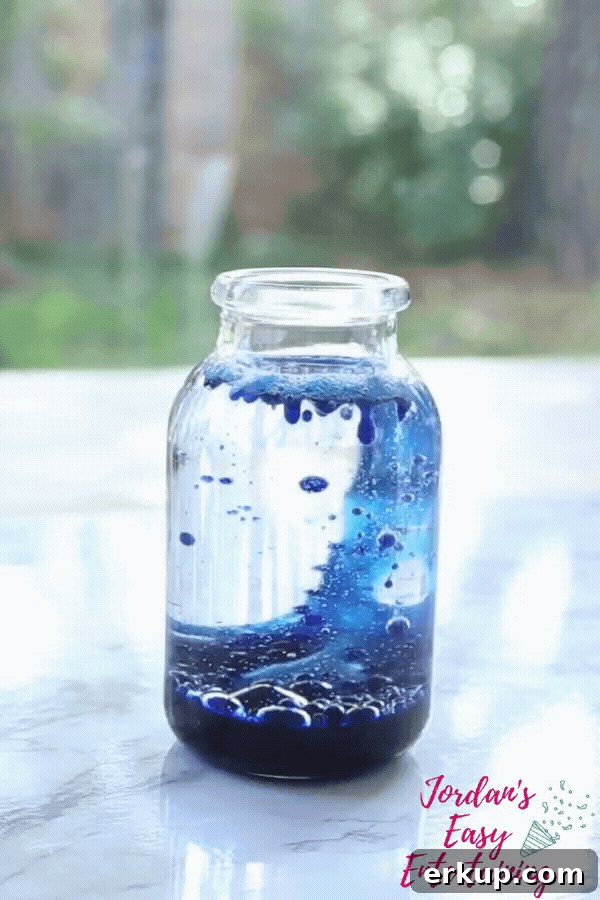
- Break an Alka-Seltzer tablet into pieces and drop one piece into the jar. Watch the colored water form blobs that rise through the oil and then fall back down as the gas escapes.
- Repeat by adding more tablet pieces when you want the bubbles to start again.
My kids love watching the colorful blobs appear and dance. Because Alka-Seltzer releases carbon dioxide gas as it dissolves, it lifts the colored water upward through the oil in small globules, creating the lava-like motion. When the bubbles reach the surface and the gas escapes, the water blobs sink back down.
What’s Happening: The Science Behind the Lava Lamp
This experiment demonstrates density and immiscibility, plus a simple chemical reaction. Oil and water do not mix, and oil is less dense than water, which is why it floats on top. Alka-Seltzer reacts with water to produce carbon dioxide gas. Tiny gas bubbles attach to the colored water, reducing its overall density and carrying it upward through the oil. When the gas escapes at the surface, the water’s density increases again and the colored blobs sink. It’s an easy way to observe concepts like density, buoyancy, and gas formation in one colorful activity.
Tips, Safety & Cleanup
- Place the jar on a tray or mat to catch any overflow; effervescence can cause the mixture to bubble up.
- Use adult supervision for younger children, especially when handling glass or breaking tablets.
- If you want to change colors, dump the mixture and rinse the jar before starting again, or use separate jars for different colors.
- This experiment is reusable; simply add another piece of Alka-Seltzer to restart the effect.
- Dispose of the contents in the trash rather than down a sink if the oil layer might clog plumbing. Wipe and wash the jar with dish soap to remove oily residue.
Virtual Summer Camp at Home Weekly Schedule
-
- Week 1: Dinosaurs
- Week 2: Space
- Week 3: Nature
- Week 4: Around the World
- Week 5: Science
- Week 6: Under the Sea
Get On The List
If you’d like to stay up to date with virtual summer camp ideas, kids’ activities, recipes, and crafts, sign up for the newsletter on the blog to receive weekly updates and new project ideas.
Want to remember this DIY lava lamp science experiment for kids? Pin for later!