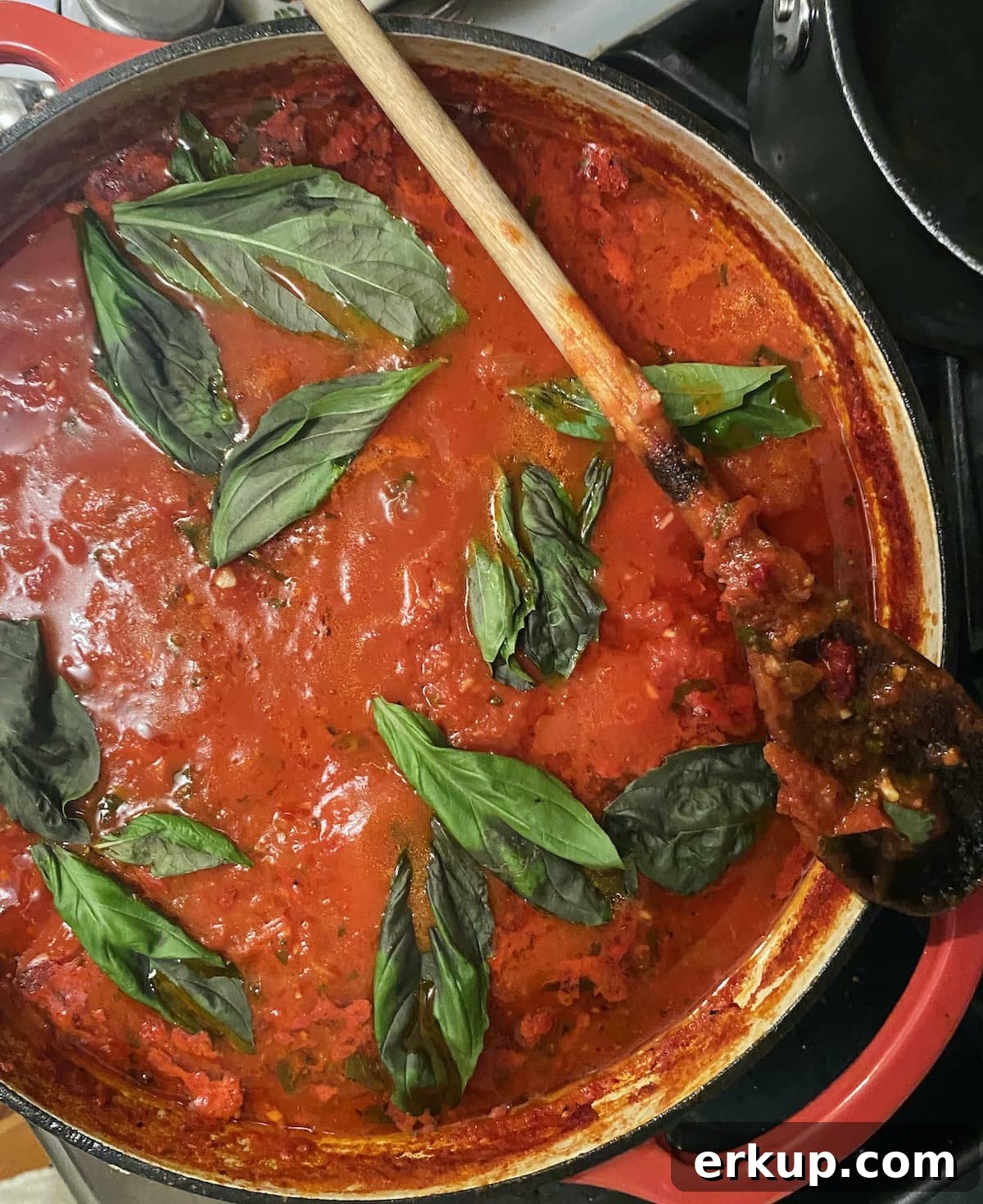
This authentic sugo recipe is an easy, reliable Italian tomato and basil sauce with deep, balanced flavor. It’s a straightforward, meat-free sauce that works wonderfully with pasta and elevates many other dishes. Once you try this homemade sugo, you may stop buying jarred sauce for good.
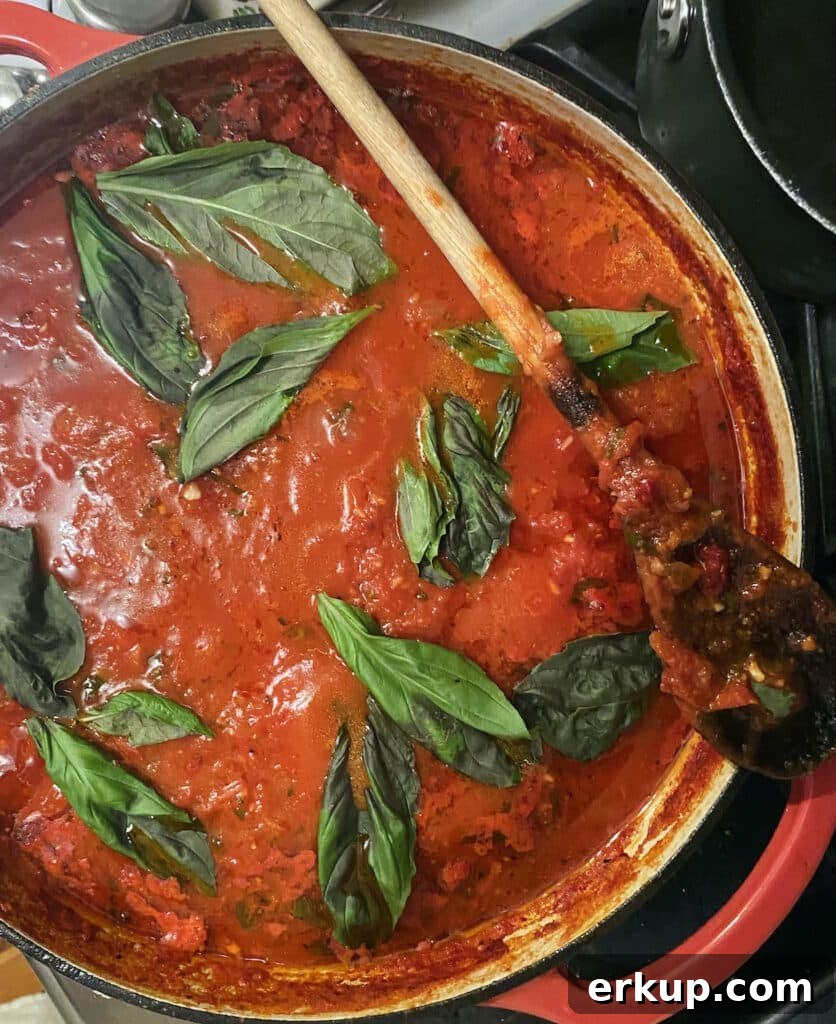
I grew up with a sugo much like this one. The aroma of simmering tomatoes and basil was the background of many Sunday dinners and family gatherings. This version is meatless and common in Italian-American kitchens in southern New Jersey: simple ingredients, slow simmering, and a focus on the tomato’s natural flavor.
Sugo—literally “sauce” in Italian—appears in countless regional variations. This family-style recipe uses a few key ingredients that highlight ripe canned tomatoes, sautéed aromatics, and fresh basil, producing a thick, luxurious sauce that pairs beautifully with pasta or as a base for other dishes.
This tomato basil sugo is excellent served with Pan-Fried Meatballs, Baked Italian Sausages, Eggplant Meatballs, Baked Gluten-Free Meatballs, Chicken Cutlets, and it enhances dishes such as Sausage Stuffed Cubanelle Peppers, Stuffed Artichoke Bottoms, Green Beans in Tomato Sauce, or Stuffed Italian Peppers.
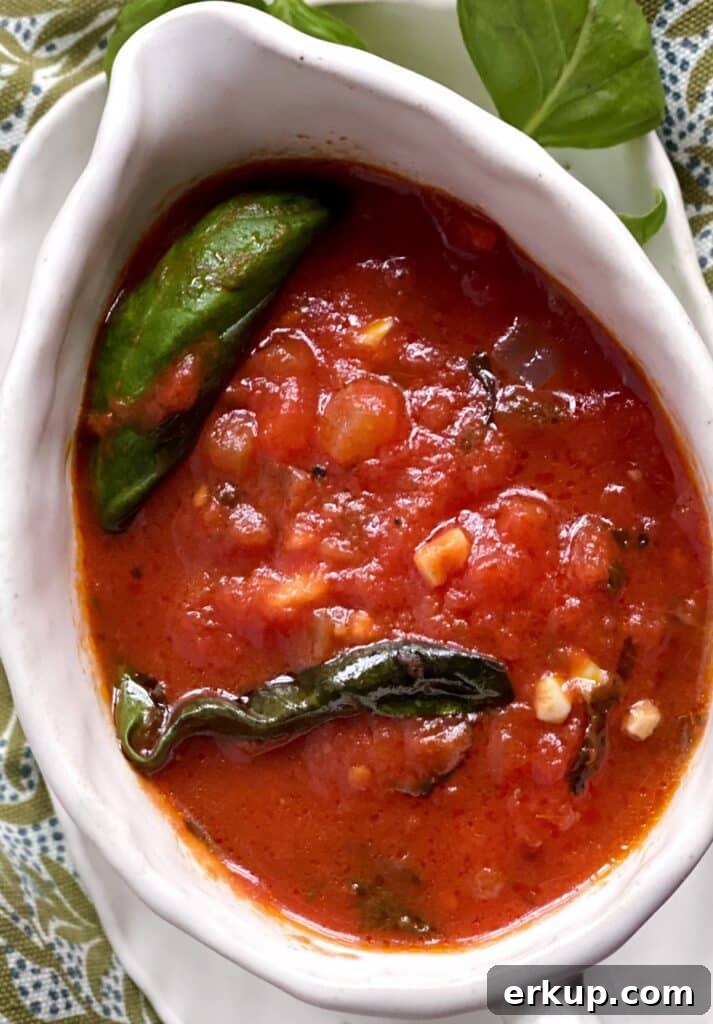
What’s the Difference Between Sugo, Marinara, Ragu and Gravy?
There isn’t a single answer—terminology often depends on region, tradition, and personal preference. In general:
- Marinara in many American kitchens refers to a quick, meatless tomato sauce often seasoned with garlic, herbs, and crushed red pepper. In parts of Italy, the term can be associated with seafood-based preparations.
- Sugo is a broad Italian word for sauce. It can be a simple tomato sauce or a richer, slowly simmered tomato-based sauce without meat.
- Ragu typically describes a hearty, meat-containing tomato sauce cooked low and slow until very rich; some Italian-American families call this “gravy.”
No matter the name, tomato sauces are fundamental to Italian cooking and every cook has their own favorite approach and arguments about the best ingredients and techniques.
If you’ve frozen tomatoes, you can use them to make sauce as well—this method works well when high-quality canned tomatoes aren’t available.
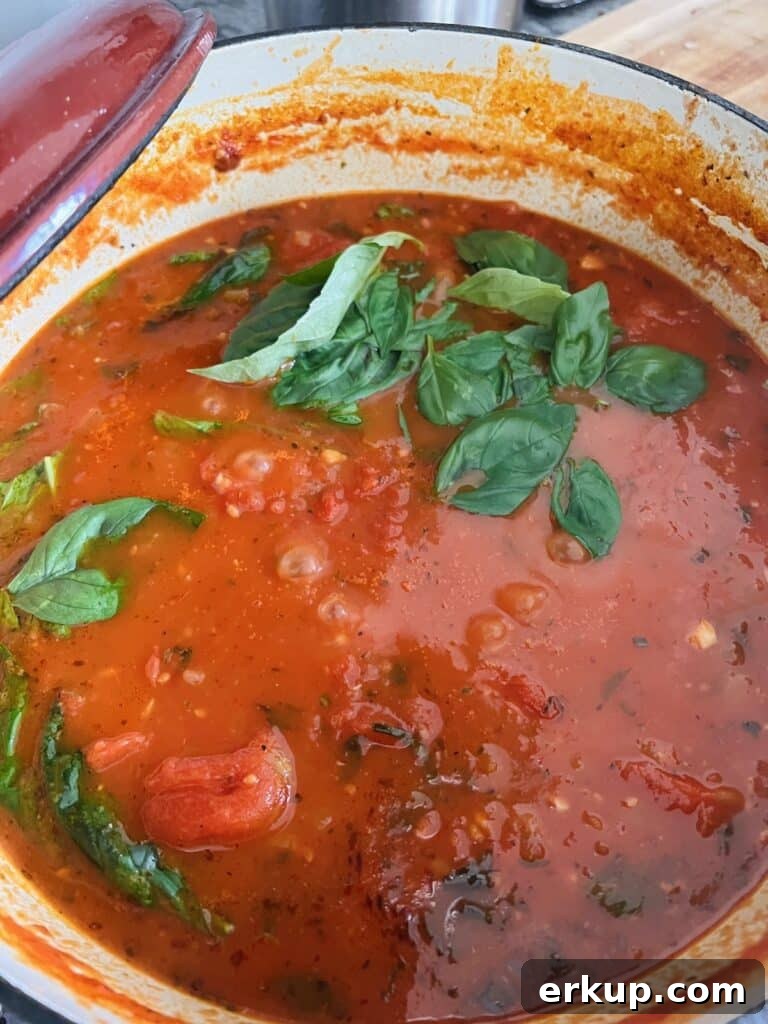
It’s All About The Tomato
This sauce depends on the quality of the tomatoes. Fresh basil and good olive oil help, but they can’t hide an inferior tomato. For reliable results, use high-quality canned tomatoes packed at peak ripeness. Recommendations:
- Imported Italian canned tomatoes.
- Whole peeled tomatoes (pomodori pelati) rather than pre-crushed or pureed tomatoes; hand-crushing yields a pleasantly chunky texture.
- If available, certified San Marzano tomatoes with DOP designation for authenticity and consistent flavor.
Quality tomatoes tend to be sweeter, have fewer seeds, and rarely need added sweeteners. For details on certifications like DOP, check reliable food and produce resources.
If you enjoy classic tomato sauces, give this sugo a try. It’s dependable, not fussy, and will win over friends and family.
Make a double batch and freeze extra portions for quick baked ziti or lasagna later.
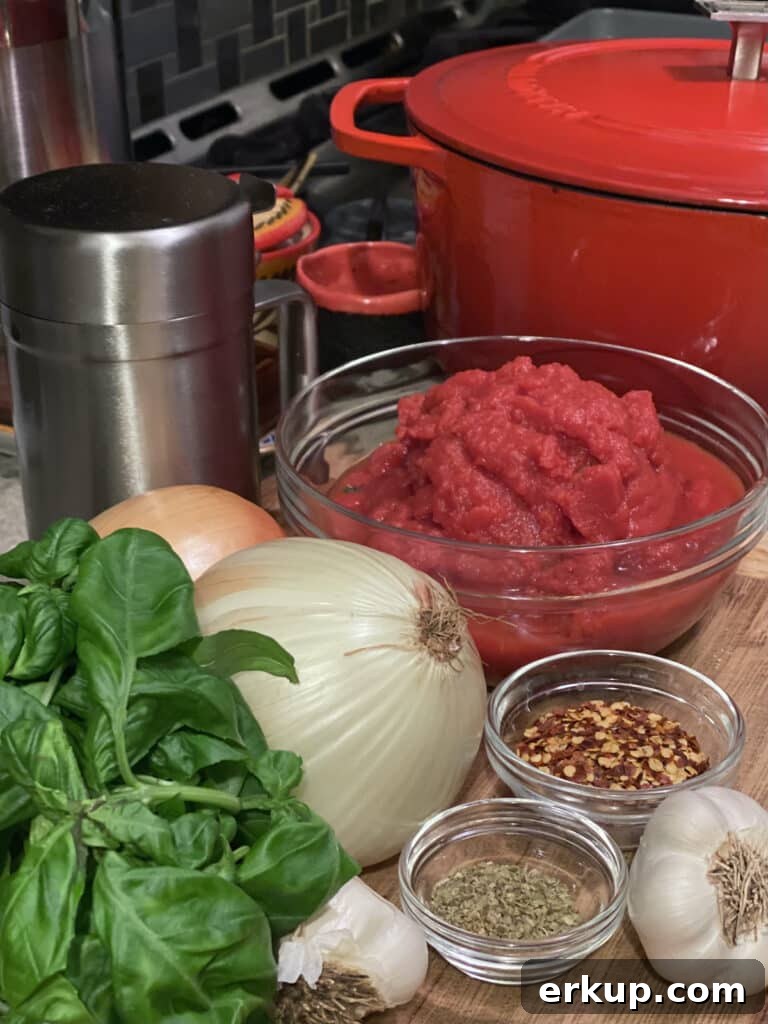
Ingredients for Tomato Basil Sugo
This traditional sauce uses a short list of ingredients. Choose the best quality you can and keep the preparation simple.
- Tomatoes: 4 (28-ounce) cans whole peeled tomatoes, crushed by hand. If you prefer a smoother sauce, use tomato puree (passata) or crushed tomatoes, or briefly blend with an immersion blender directly in the pot.
- Fresh basil: Used both during cooking to infuse flavor and stirred in at the end for brightness. If you don’t have fresh basil, 2–3 teaspoons dried basil added with the oregano will work.
- Onions and garlic: Finely chopped yellow onions (about 2 cups) and finely chopped garlic (about 1/4 cup) build essential savory depth.
- Extra virgin olive oil: About 1/3 cup to sauté the aromatics.
- Dried oregano and crushed red pepper: Small amounts to round out the flavor—subtle, not overpowering.
- Seasoning: Salt and black pepper to taste; start with about 2 tsp salt and 1/2 tsp black pepper and adjust after simmering.
Steps to Make Authentic Sugo (Pro Tips Included)
Follow these straightforward steps to produce a flavorful, balanced sugo.
- In a heavy-bottomed saucepan or Dutch oven, warm 1/3 cup extra virgin olive oil over medium heat. Add 2 cups finely chopped yellow onions and sauté until soft, about 5–7 minutes. Covering the pot briefly can speed softening.
- Add 1/4 cup finely chopped garlic and cook until fragrant but not browned.
- Add 1 cup sliced or hand-torn fresh basil and 1/2 tsp crushed red pepper. Cook for two minutes while stirring to release the herb’s aroma. If you lack fresh basil, add 2–3 teaspoons dried basil with the oregano later.
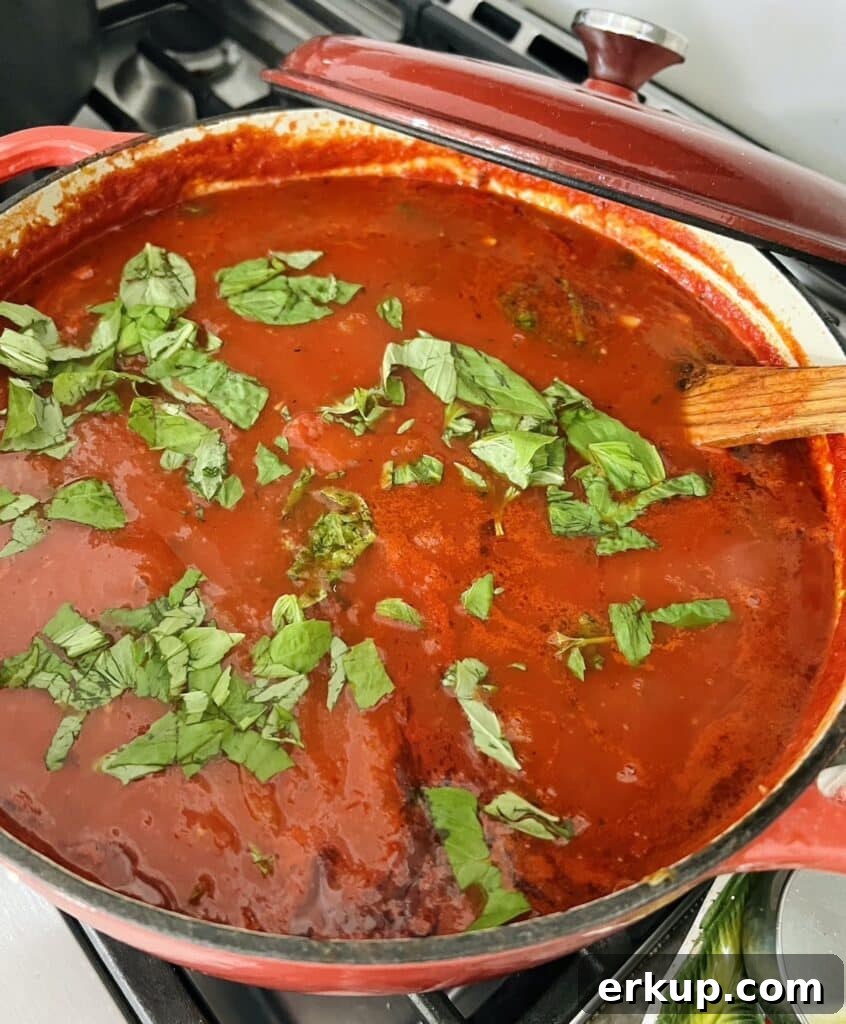
- Pour in the crushed tomatoes (or your chosen canned style), add one can of water, 2 tsp salt (or to taste), 1/2 tsp black pepper, and 1 tbsp dried oregano. Bring to a light boil, then immediately reduce to a low simmer. Partially cover and simmer for 45–60 minutes until the sauce has thickened and flavors have melded. If using whole or diced tomatoes in juice, reduce the added water by about 25% or simmer longer to reach desired thickness.
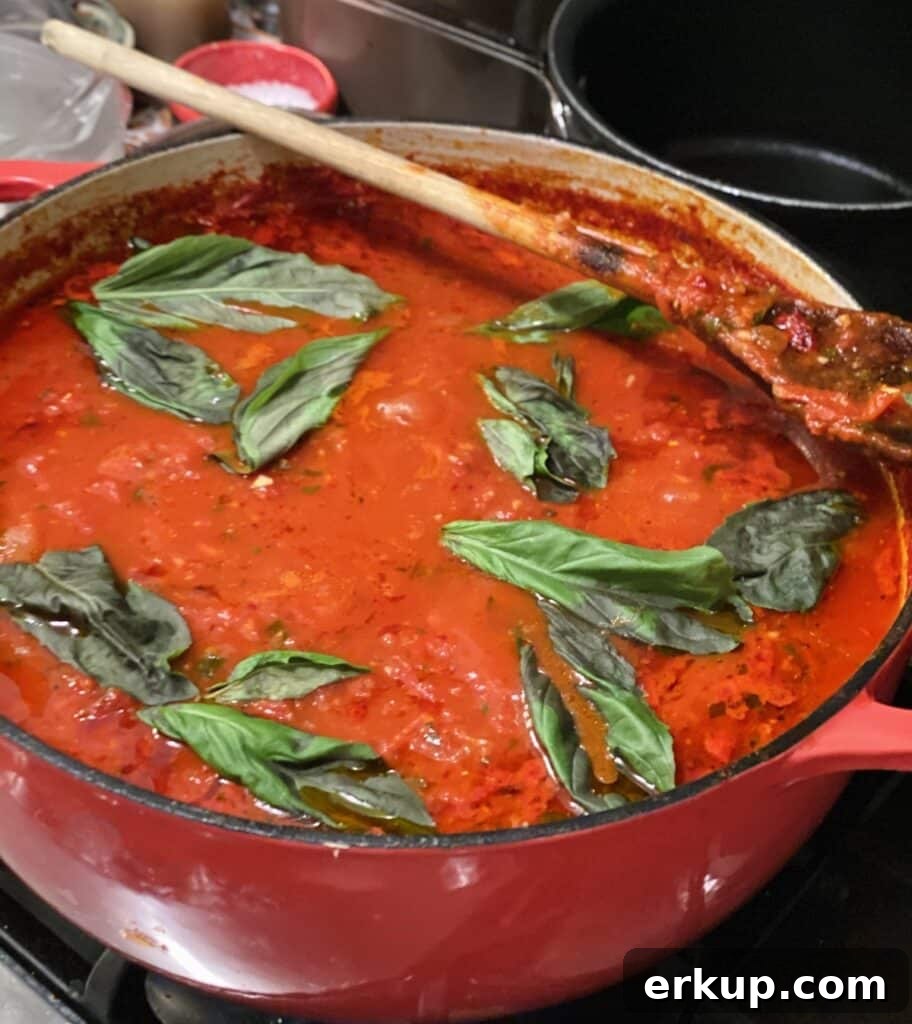
- Remove from heat, stir in a large handful of fresh basil leaves torn or left whole, and taste for seasoning adjustments. The sauce keeps in the refrigerator up to 7 days or freezes for 3–6 months.
Pro-tip: This recipe yields roughly 12–13 cups of sauce. Halve or double the quantities as needed and freeze portions in sizes convenient for future meals.
Frequently Asked Questions
Below are concise answers to common questions about this sugo:
What are the best canned tomatoes to use?
Use the best-quality canned tomatoes you can find—imported Italian tomatoes are ideal. Whole peeled tomatoes (pomodori pelati) are preferable because they are less processed; hand-crush them for texture. Certified San Marzano tomatoes are a good choice when available. If you want a smoother sauce, tomato puree or crushed tomatoes work well.
Should I add sugar to the sauce?
Some cooks add a pinch of sugar to balance acidity, but with quality tomatoes this isn’t usually necessary. As an alternative, adding a couple of large carrot chunks while simmering can naturally sweeten the sauce; remove the carrots before serving.
Can I use dried basil instead of fresh?
Fresh basil gives the best flavor. If you must use dried, add 2–3 teaspoons with the dried oregano and then finish with fresh basil if possible.
Can I double or triple the recipe? How long does it freeze?
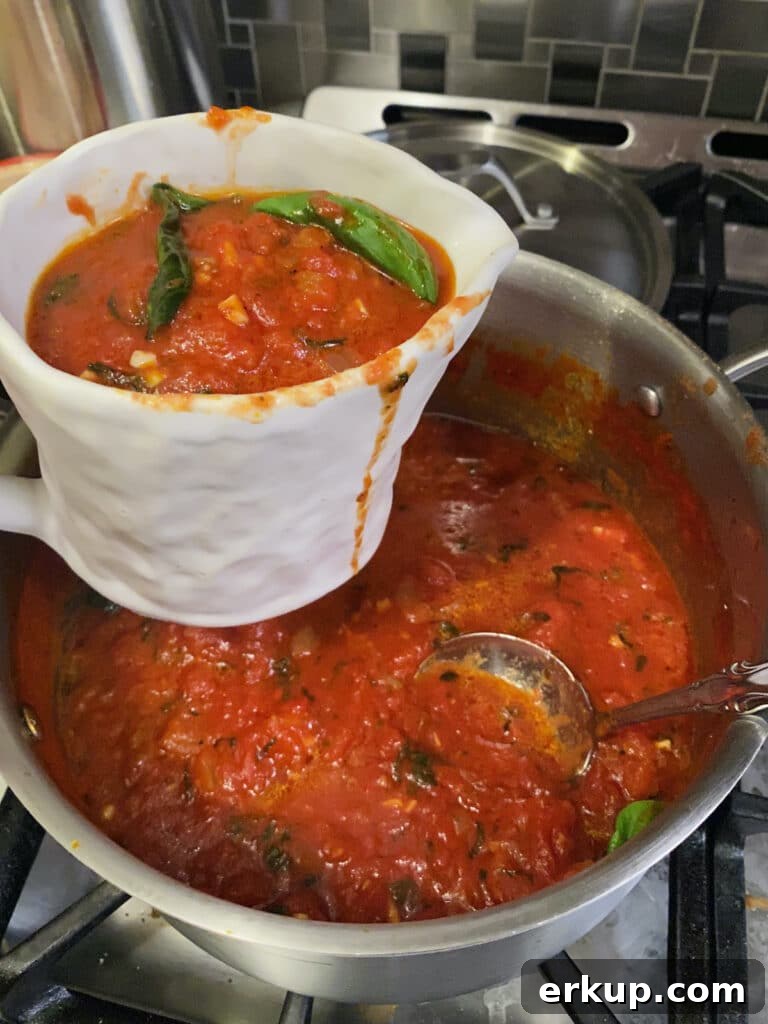
Yes—this sauce freezes very well. In airtight containers it will keep 3–6 months in the freezer. I often make at least a double batch and freeze portions sized for one pound of pasta.
What ratio of sauce to pasta is best?
A good rule of thumb is about 3 cups of sauce per pound of pasta, though preferences and pasta shapes vary.
Is this recipe suitable for canning?
This recipe is written for stovetop preparation and freezing. If you plan to home-can tomato sauce, consult authoritative canning guidance to ensure safe processing times and methods.
Recipe Variations
This basic sugo is versatile—try these variations to change flavor, texture, or heat level:
- Add fresh parsley with the basil for a brighter herb profile.
- Deglaze the pan with a splash of dry white or red wine before adding tomatoes to lift browned bits and deepen the sauce’s flavor.
- For more heat, increase crushed red pepper or add a spoonful of Calabrian chile paste at the start.
- Use fresh tomatoes in summer: blanch, shock, peel, and seed plum or Roma tomatoes before cooking. You may want to add a little tomato paste for body.
Serving Suggestions and Storage Information
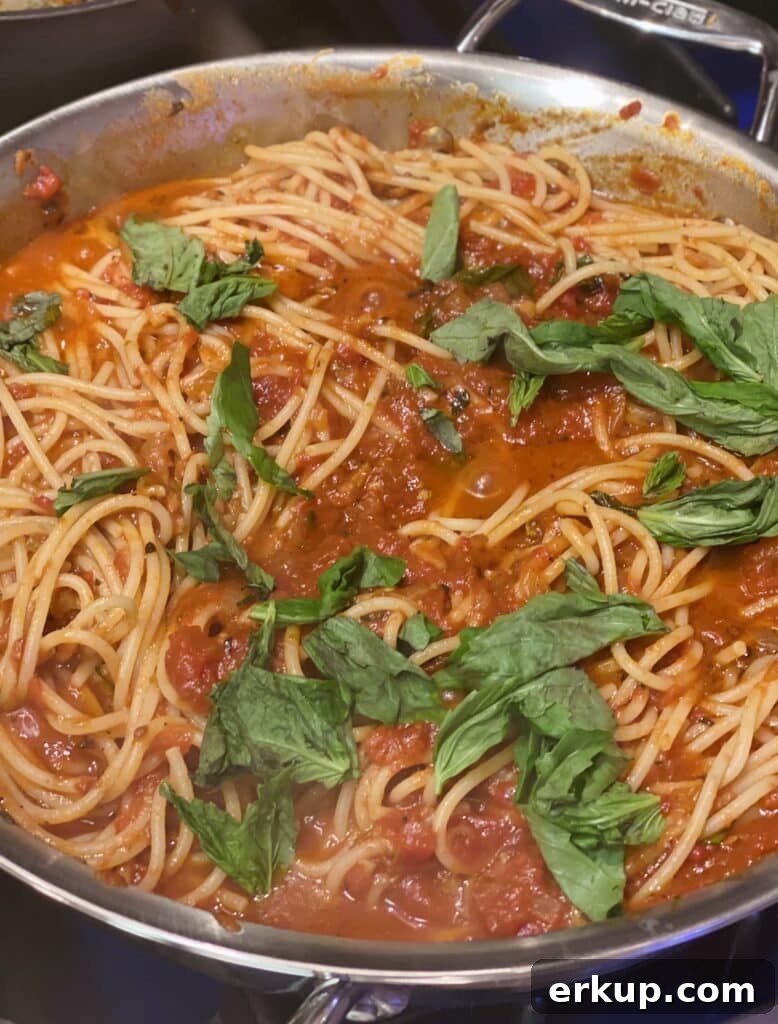
This sugo is excellent beyond pasta. Keep portions frozen to use for chicken parm, eggplant parm, meatball subs, eggs in purgatory, baked ziti, lasagna, or as a dip for crusty bread. It’s a versatile pantry staple that makes quick weeknight meals feel homemade.
Store leftovers in an airtight container in the refrigerator for up to one week. For longer storage, freeze in well-sealed containers or bags for three to six months. Freezing in 3–4 cup portions is convenient for a pound of pasta.
More Homemade Italian Favorites
A few classic Italian-American dishes that pair well with sugo include easy homemade meatballs, pasta e piselli (pasta with peas), pasta with chickpeas, greens and beans, and pasta with broccoli. These simple recipes celebrate the same pantry-friendly, ingredient-first approach.
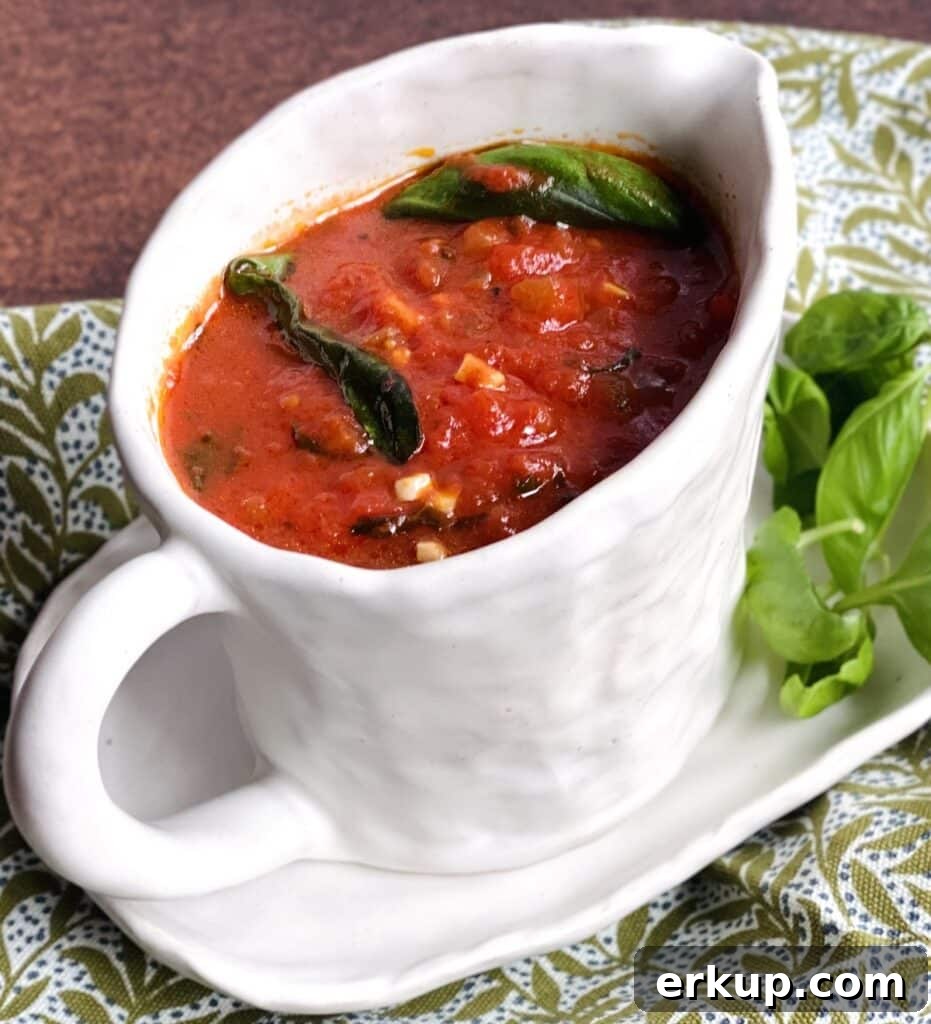
Authentic Sugo Recipe without Meat (Italian Tomato Basil Sauce)
Yields: about 12–13 cups (serves to sauce approximately 4 pounds of pasta at 3 cups per pound). Prep: 10 minutes. Cook: 1 hour.
Ingredients
- 1/3 cup extra virgin olive oil
- 2 cups finely chopped yellow onions
- 1/4 cup finely chopped garlic
- 1 cup sliced or hand-torn fresh basil, lightly packed
- 1/2 tsp crushed red pepper
- 4 (28-ounce) cans whole tomatoes, crushed by hand
- 1 can water (use one empty tomato can to measure)
- 2 tsp salt, or to taste
- 1/2 tsp black pepper, or to taste
- 1 Tbsp dried oregano
- Large handful fresh basil leaves, for finishing
Instructions
- Heat olive oil in a heavy-bottomed saucepan or Dutch oven over medium heat. Sauté the onions until soft, about 5–7 minutes (cover briefly to speed the process if desired).
- Add the garlic and cook until softened and fragrant.
- Stir in the basil and crushed red pepper and cook for two minutes to release the basil’s aroma.
- Add the crushed tomatoes, one can of water, salt, black pepper, and dried oregano. Bring to a light boil, then reduce to a low simmer. Partially cover and simmer for 45–60 minutes until reduced and fragrant. Taste and adjust seasoning.
- Remove from heat and stir in a large handful of fresh basil. Cool and refrigerate up to seven days or freeze for three to six months. Buon appetito!
Notes
- Use fresh basil for the best results; if using dried, add it with the oregano (2–3 tsp).
- For a smoother sauce, substitute tomato puree or crushed tomatoes, or use an immersion blender in the pot.
- Adjust water when using tomatoes packed in juice—reduce added water by about 25%.
- The longer the sauce simmers, the thicker and more concentrated the flavor becomes.