
Sugar Lace: I wrote a post about it. Want to read? Here it is.
It was a quiet Saturday evening and I finally had a stretch of time to sit down and write about sugar lace. The short version: the technique looks advanced but is surprisingly straightforward. With a few simple tools and a reliable mix, you can create delicate, edible lace to decorate cakes, cookies and other confections.
I originally used this lace on an Orange Chocolate Mousse Cake and since then have had many questions about the lace technique and materials. I also posted sugar lace leaves and flowers on Instagram, which generated more interest, so I created this post to explain how I make the edible lace and to describe the products I used.
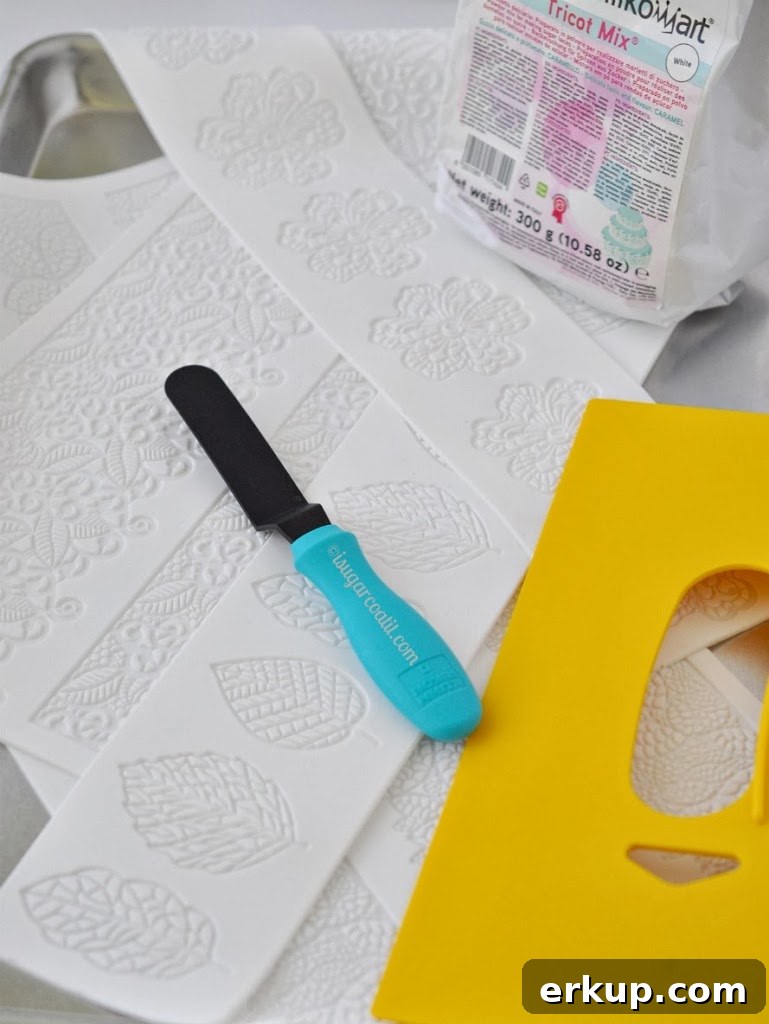
The product I used is Tricot Mix, and the silicone mats are made by Silikomart. These items are available from specialty cake-supply retailers. Tricot Mix is a ready-to-use powder that, when combined with warm water, becomes a spreadable paste suitable for filling lace mats.
The process is essentially four steps: mix, spread, bake, and apply. The mats and mix are an investment, but if you enjoy refined, edible decoration they are worth considering. The photo above shows a selection of different lace mats and patterns.
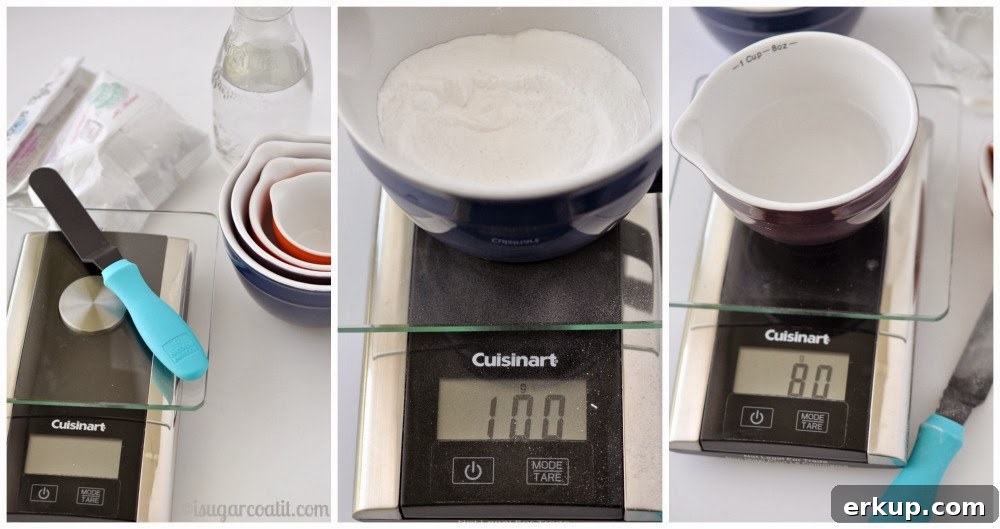
For these pieces I used about one-third of a Tricot Mix package (roughly 100 grams) combined with 80 grams of warm water. That amount produced enough paste for three strips from the Leaves Lace mat, four from the Baroque mat, and two each from smaller Flower and Nature mats. A useful tip is to save any excess paste as you fill the cavities so you don’t waste material.
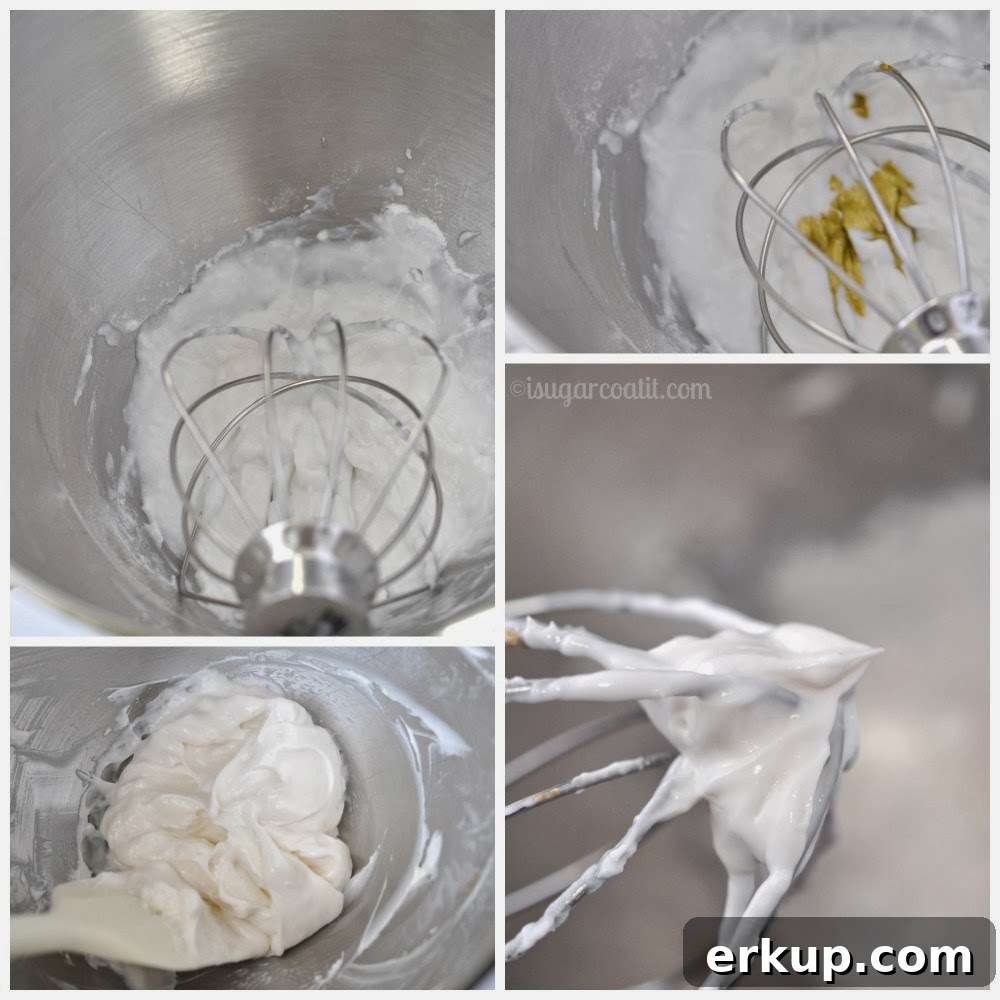
I added a couple of drops of gold airbrush color for a soft vintage tone, though the lace still looked mostly white after baking. You can color the paste any way you like. Whisk the mixture on high with a whisk attachment until it reaches the consistency of mayonnaise and forms soft peaks — for my KitchenAid that took about one minute.
Lay the silicone mats on cookie sheets, then spread the paste into the molds using an angled spatula. Work carefully to get the paste into all the tiny crevices; going over the mat a couple of times helps. Remove excess paste with a straight edge. I recommend a plastic cake smoother rather than a metal bench scraper, which can gradually damage the silicone mat.
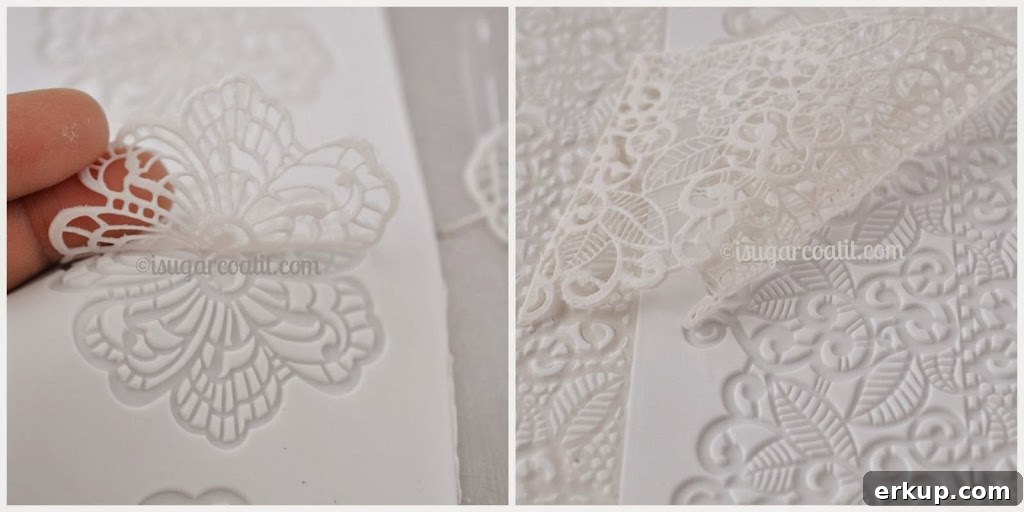
Bake the filled mats on the cookie sheets in a preheated oven at around 178°C (350°F). Smaller pieces are usually ready in 5–10 minutes; larger mats can take up to about 15 minutes. Oven type, humidity and ambient temperature can affect bake time, so monitor your first batch closely. The lace should peel away easily from the mat and remain pliable. Overbaked lace becomes brittle and will crack; underbaked lace will be tacky and may stretch or tear when removed.

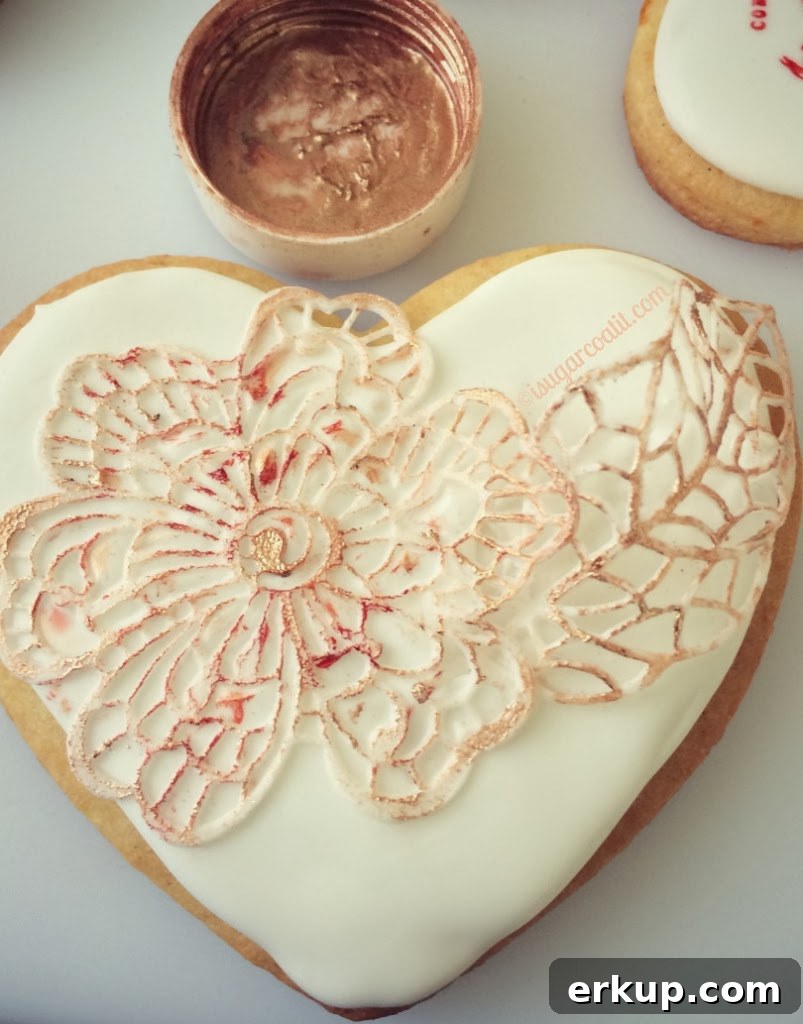
For the cookies shown, I used a heart-shaped cutter to trim the Baroque lace and applied the cutouts to royal icing while it was still slightly wet so the lace adhered smoothly. There are many creative ways to use sugar lace on cakes, cupcakes and cookies; I’ll showcase more techniques in a follow-up post.
I also recorded a short video demonstrating these four steps. I narrated and edited it late one night on a tablet, so the voiceover is informal — but it demonstrates the method clearly.
Below are some finished cookies that I gently brushed with color for a soft, vintage effect.

Note: Tricot Mix is prepared differently than SugarVeil. I’ve used both products and find Tricot Mix a little easier and less temperamental, and it can be used immediately—SugarVeil often requires more advance preparation. Both produce beautiful edible lace effects; choose the option that best fits your workflow.
Chrissie at Icing Inspirations (a supplier of these products) also has a helpful video showing how to use the mats and mix if you’d like a visual demonstration.
I’ll be back soon with a muffin recipe and some Valentine’s Day decorating ideas. See you next time!
More Lacy Numbers:
Valentine Love Lace Cupcake Toppers
Sugar Lace Engagement Cake
Halloween Cake SugarVeil Witch
Lacy Orange Chocolate Mousse Cake