Pellet grills are an excellent way to grill and smoke a wide range of meats and vegetables. The last thing you want is to run out of pellets in the middle of a long cook, so understanding burn rates and storage is essential.
In this guide you will learn:
- How long pellets typically last in a pellet grill
- How storage affects pellet life
- Common reasons pellets burn faster than expected
- Practical tips to stretch your pellets and improve efficiency
How Long Do Pellets Last?
Pellet smokers are convenient because most models include a hopper that can hold enough pellets for an entire cook. Still, if you have a smaller grill or only a partial bag, you’ll want to estimate how long your pellets will last.
Typical pellet burn rates fall between about 1 and 3 pounds per hour. The exact rate depends on the grill’s make and model, ambient conditions, and the cooking temperature. At that burn rate, a 20 lb bag will generally last roughly 7 to 20 hours, depending on how hard you’re running the grill.
When planning a cook, round up your pellet needs so you don’t end up mid-cook without fuel. It’s better to have a little extra than to pause a long smoke to buy more pellets.
How Long Do Pellets Burn For? (At Different Cooking Temperatures)
Burn rate varies most with temperature. Low-and-slow cooks consume fewer pellets per hour than high-temperature sears:
- At around 225°F a pellet grill may use roughly 0.5–1 lb per hour.
- At high temperatures (roughly 450°F and above) plan on about 2–4 lb per hour or more.
Also factor in grill size and cooking surface area: larger grills typically require more fuel to maintain set temperatures. Consult your owner’s manual for manufacturer burn-rate guidance and always round up your estimate.
How Long Pellets Last in Different Grill Models
Below are approximate burn rates for several common pellet grill models. These are estimates based on typical use; individual results will vary.
| Pellet Grill Model | Low Temp Burn Rate (≈225°F) | High Temp Burn Rate (≈450°F+) |
|---|---|---|
| Camp Chef Woodwind | ~0.75 lb per hour | ~2 lb per hour |
| Traeger Pellet Grills | ~1 lb per hour | ~3 lb per hour |
| ZGrills 700 Series | ~1 lb per hour | ~2 lb per hour |
| Pit Boss Pellet Grills | ~1 lb per hour | ~3 lb per hour |
| Louisiana Grills Black Label | ~1.6 lb per hour | ~4.5 lb per hour |
| Green Mountain Trek | ~0.5 lb per hour | ~2 lb per hour |
| Weber SmokeFire | ~1.25 lb per hour | ~4 lb per hour |
Note: Different wood types and pellet blends burn at different speeds. If you mix flavors in the hopper you may see slight variance in overall burn rate.
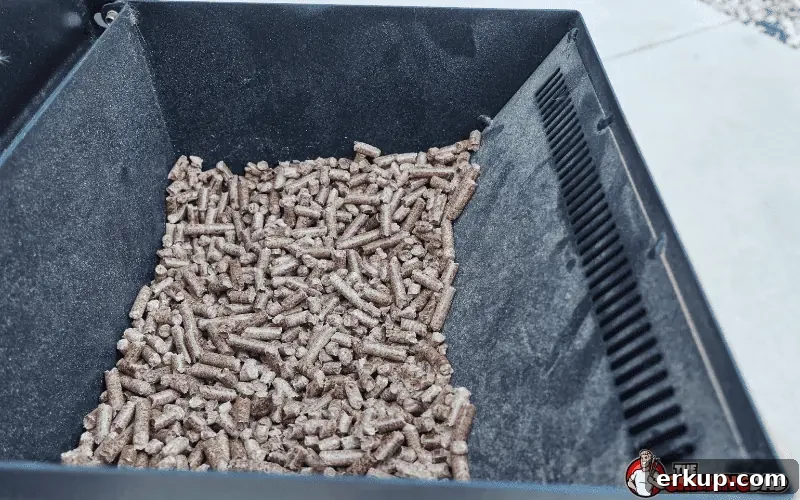
How Long Can You Store Pellets in Your Pellet Grill?
How you store pellets has a big impact on their usable life. We generally do not recommend leaving pellets in the hopper between cooks. Over time pellets exposed to humidity or temperature swings can expand, crumble, or clog the auger.
Pellets kept in the grill hopper may be okay for a week or two in very dry, stable conditions, but once pellets sit for longer periods their quality declines. In general, expect stored pellets to remain good for about 6 months in typical garage or shed conditions; with careful indoor storage they can last up to a year.
Store pellets in a cool, dry place out of direct sunlight. Metal or plastic buckets with lids work well for keeping pellets dry and pest-free. If you live in a humid climate, store pellets indoors to prevent moisture absorption.
Why My Wood Pellets Don’t Last Very Long
If your grill is burning through pellets faster than expected, consider these common causes:
Your Grill Is Old
Older grills tend to be less fuel-efficient. If your unit is several years old it may burn more pellets to reach and hold set temperatures compared with a newer model.
Your Grill Is Dirty
A buildup of ash, grease, and debris reduces efficiency. Regular cleaning of the firepot, auger area, and grill interior helps maintain consistent burn rates and better fuel economy.
You Are Buying Cheap Pellets
Lower-cost pellets can include fillers or poor-density material that burns faster. Higher-quality, denser pellets often burn more steadily and last longer. Buying pellets recommended by your grill manufacturer is a safe choice.
It’s Stormy Outside
Cold, windy, or rainy weather makes the grill work harder to maintain temperature, increasing pellet consumption. When grilling in poor weather, bring extra pellets.
You’re Storing Your Pellets in the Grill
Pellets left in the hopper can absorb moisture and change burn behavior. Remove and store pellets indoors after long cooks to keep them dry and consistent.
Your Grill Is Large
Larger grills need more fuel to heat bigger cooking surfaces. If you frequently cook for just a few people, consider a smaller grill for everyday use and reserve your large model for gatherings.
You’re Cooking at High Temps
Searing and high-temperature cooking consume significantly more pellets than low-and-slow smoking. For frequent high-temp cooks, plan on larger or additional bags of pellets.
Tips for Making Your Pellets Last
- Buy high-quality pellets—density and purity matter.
- Clean your pellet grill regularly to maintain efficiency.
- Keep the grill closed as much as possible while cooking.
- Position the grill out of heavy wind to reduce heat loss.
- Store pellets indoors or in a dry, covered container when not in use.
If you follow these steps and still see high pellet usage, evaluating a newer, more efficient grill may be worthwhile.
How Long Do Pellets Last — FAQ
How Long Will a 10 lb Bag of Wood Pellets Burn?
A 10 lb bag will last roughly half as long as a 20 lb bag. Using typical burn rates, that translates to several hours at low temps and fewer hours at high temps. Exact duration depends on grill model and cooking temperature.
Cost of Wood Pellets Versus Other Energy Sources
Pellets can be economical compared with propane or other fuel types in many areas. They also burn evenly, making consumption easier to predict versus lump charcoal.
How Many Bags of Wood Pellets Should You Buy?
For new pellet grill owners, start with 2–3 large bags (30 lb or more) and two different flavors to experiment. Once you learn your typical usage, consider buying larger quantities during sales if you have dry storage space.