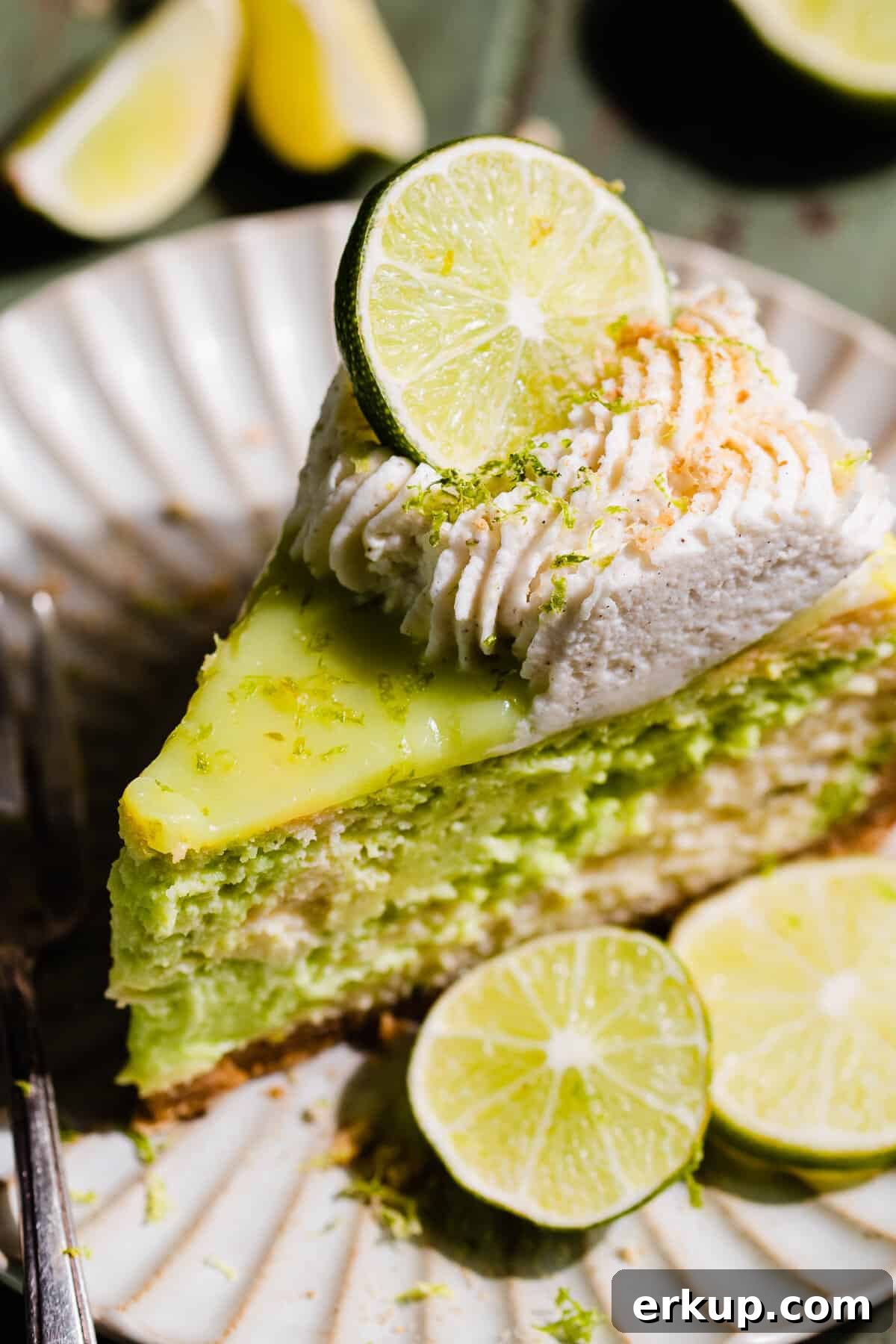
Homemade Whipped Cream is simple to make using just a few pantry ingredients. Below you’ll find clear steps for whipping, stabilizing, piping, and flavoring cream so you can top cheesecakes, pies, cakes, and other desserts with a light, fresh finish.
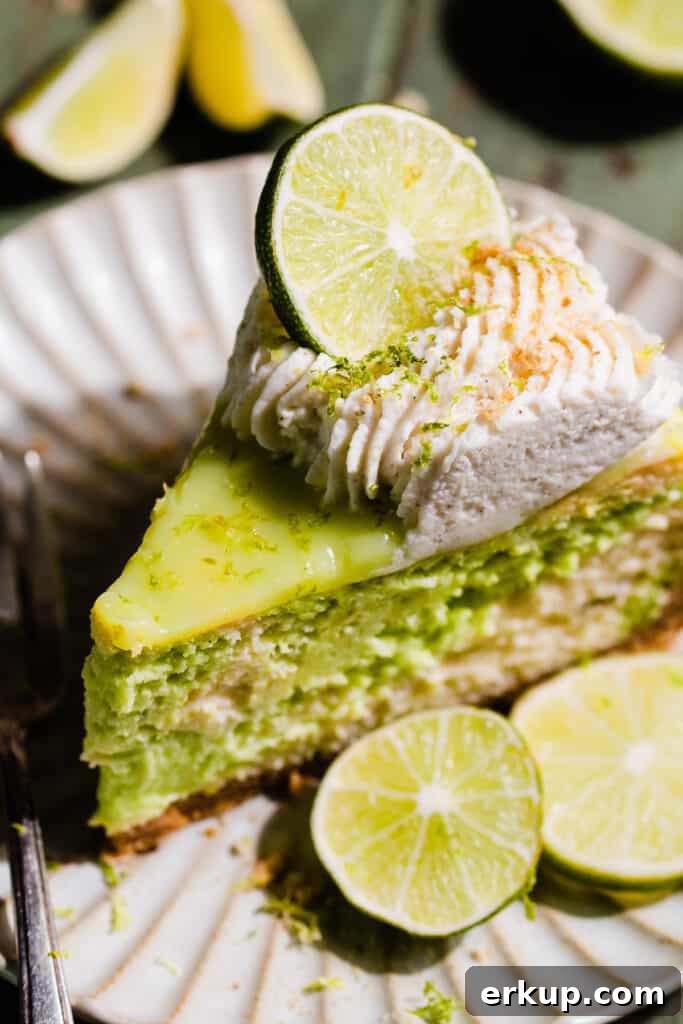
Why you’ll love Homemade Whipped Cream
- Easy to make – Ready in minutes with three basic ingredients.
- Fresh flavor – The taste is brighter and cleaner than most store-bought varieties.
- Customizable – Add flavorings or stabilize it for piping and long-lasting decoration.
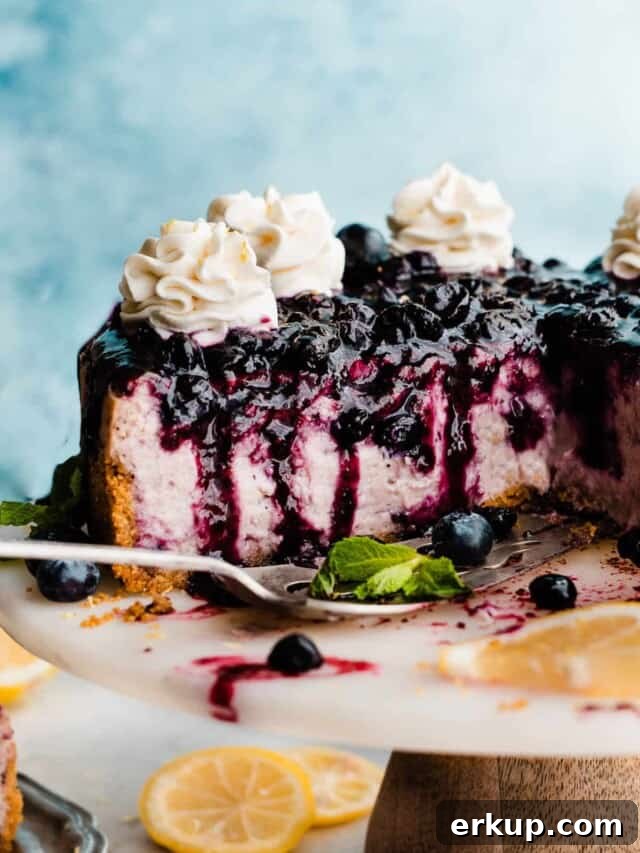
Ingredient overview
The full recipe measurements appear in the recipe card below.
- Heavy cream – Use very cold heavy whipping cream. It doubles in volume when whipped, so 1/2 cup of cream yields about 1 cup of whipped cream.
- Vanilla – Vanilla extract or vanilla bean paste. Paste leaves tiny vanilla flecks for a pretty finish.
- Powdered sugar – Gives sweetness without a grainy texture; use powdered (confectioners’) sugar rather than granulated.
- Gelatin (optional) – Plain powdered gelatin stabilizes whipped cream so it holds shape for piping or for desserts that need to sit in the fridge.
Substitutions & variations
- Gluten-free: Naturally gluten-free.
- Dairy-free: Use a trusted dairy-free heavy cream alternative; success varies by brand.
- Flavored whipped cream: Fold in cocoa powder, freeze-dried fruit powder, or citrus juice to vary the flavor.
- Almond extract: Add 1/4 to 1/2 teaspoon of almond extract for a nutty note alongside vanilla.
- Light cream: Avoid light whipping cream — lower fat content makes it difficult to whip properly.
How to make the best whipped cream
Step 1: Prep. Make sure your heavy cream is very cold, straight from the fridge. If you have trouble getting cream to whip, chill the mixing bowl and beaters for 20 minutes before beginning.
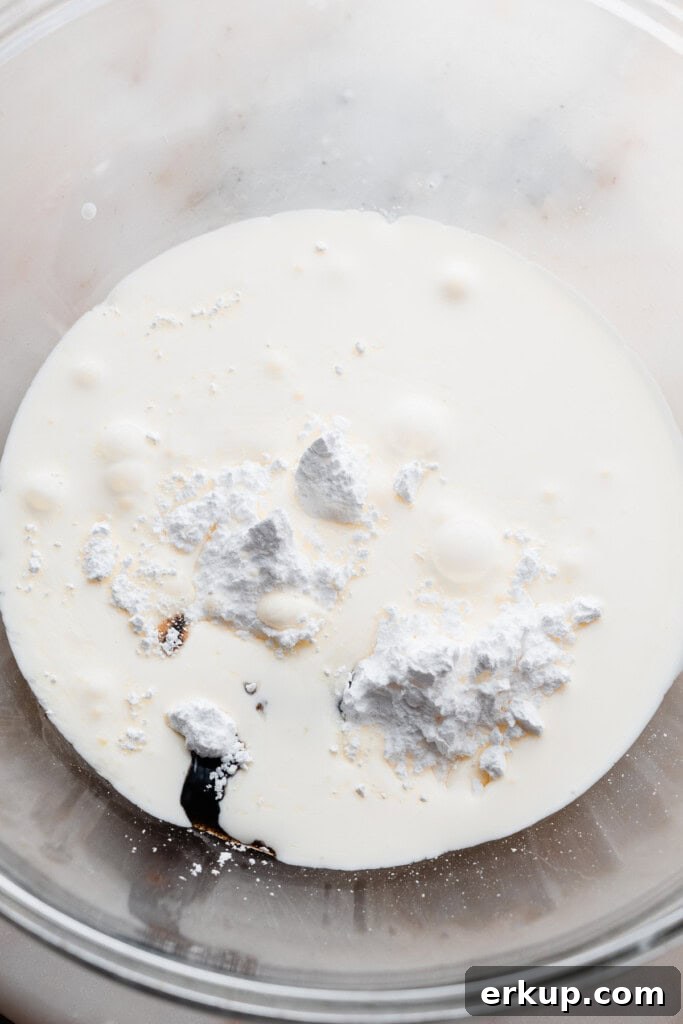
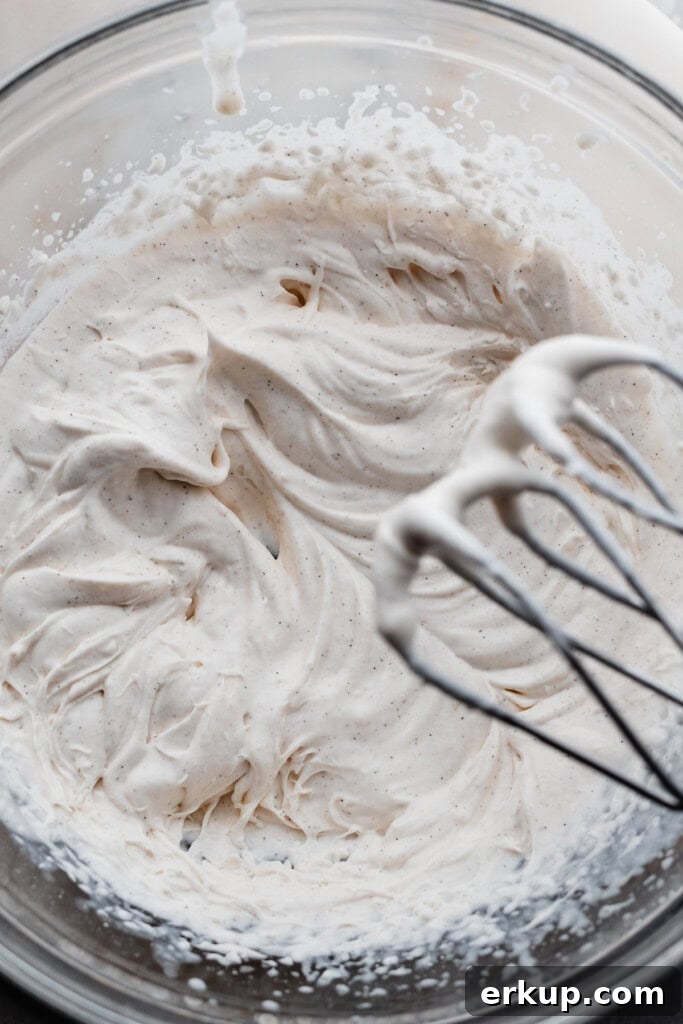
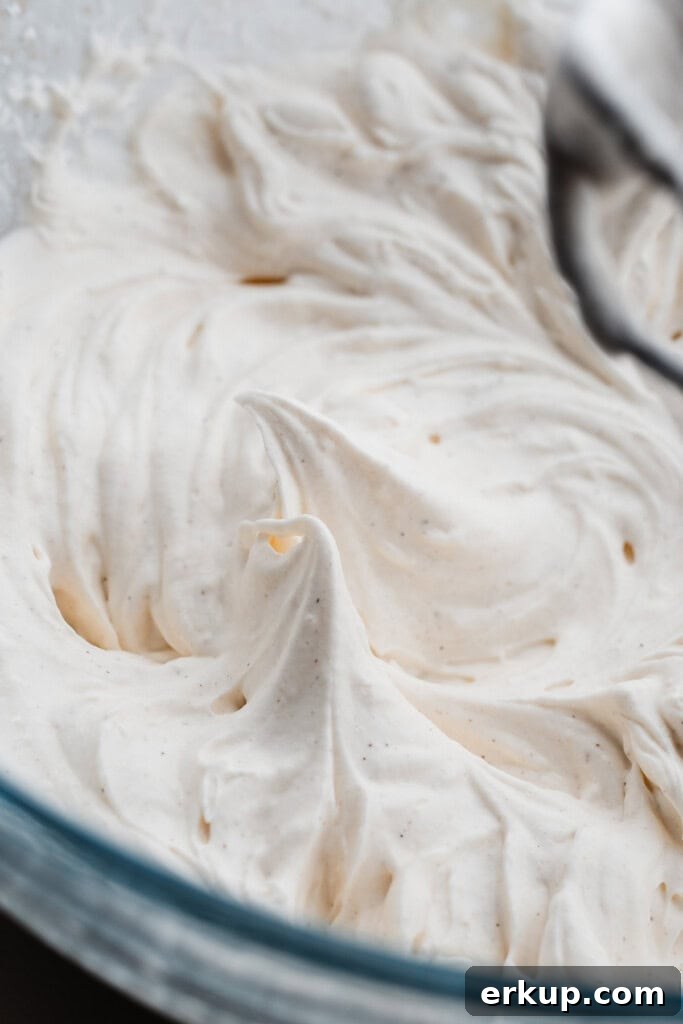
Step 2: Mix. Add the cream, powdered sugar, and vanilla to a large bowl. Beat on medium-high speed. The mixture will splatter at first; a towel draped over the bowl helps contain it. Watch for stages: the cream will thicken, reach soft peaks, then stiff peaks. Stop at the desired stage—do not overmix or the texture will become curdled.
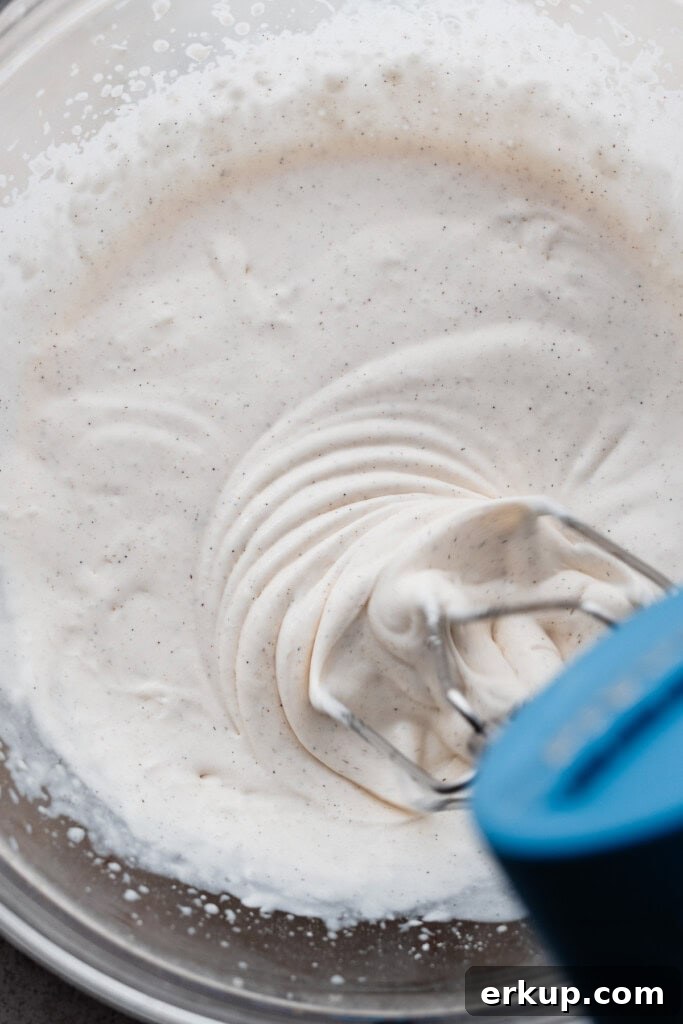
Step 3: Finish. Soft peaks are great for dolloping onto individual desserts. Stiff peaks are better for piping or for a more stable topping on pies and cheesecakes. If you plan to pipe, stabilize the cream (see next section).
How to stabilize whipped cream
Stabilized whipped cream keeps its shape and resists weeping for hours in the fridge, which is useful when you need to pipe decorations or prepare a dessert in advance.
A simple method is to bloom and melt a small amount of plain gelatin, then stream it into the cream as it thickens. You won’t taste the gelatin, but it will add structure. Alternatively, fold in a little cream cheese or mascarpone for stability plus richness.
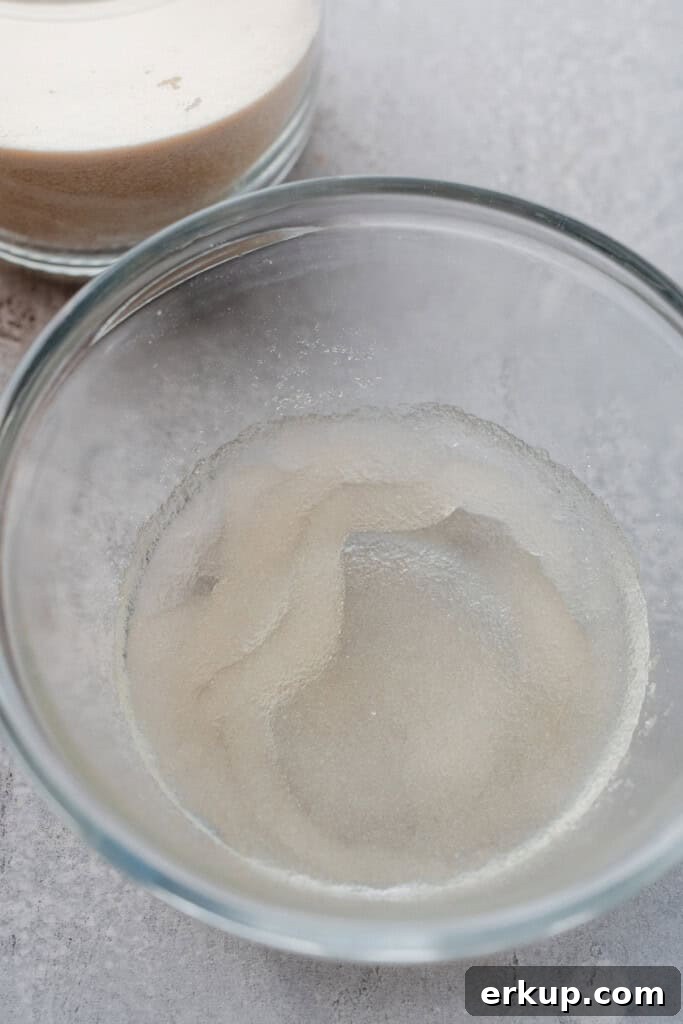
Gelatin method: Sprinkle gelatin over cold water (use a ratio that produces a soft gel), let it sit until jelly-like, then warm briefly until liquid. Begin whipping the cream; when it just starts to thicken, slowly drizzle in the liquid gelatin while beating on low, then increase speed until stiff peaks form.
How to pipe whipped cream
Stabilize the cream first if you need crisp shapes. Fit a piping bag with your chosen tip, fill it, and pipe onto a chilled dessert just before serving, or pipe directly onto individual slices as you serve them.
How to beautifully dollop whipped cream
Use the back of a spoon to create gentle waves across the cream, then press the spoon vertically through the waves and lift. This produces a pretty, sturdy dollop that can be nudged onto a slice of cake or pie.
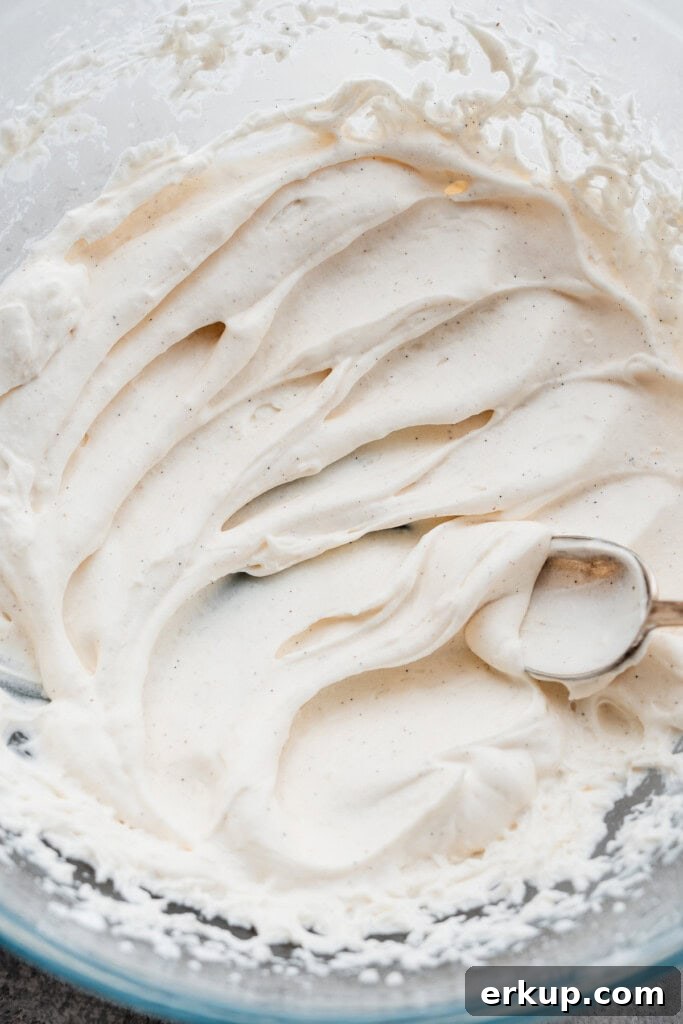
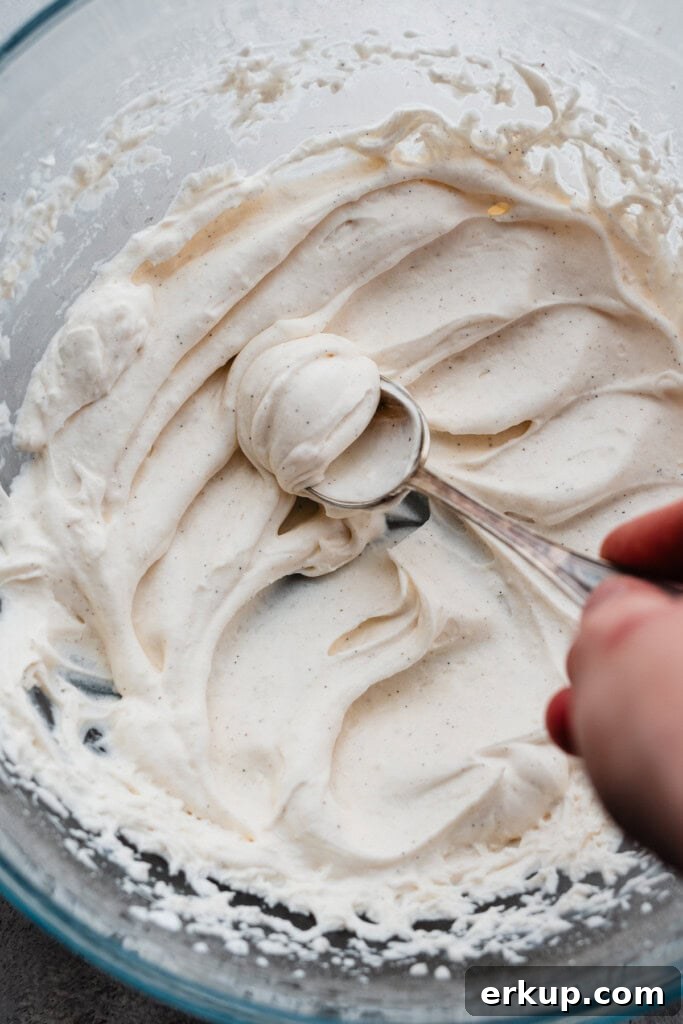
This technique yields neat dollops that transfer cleanly from spoon to dessert.
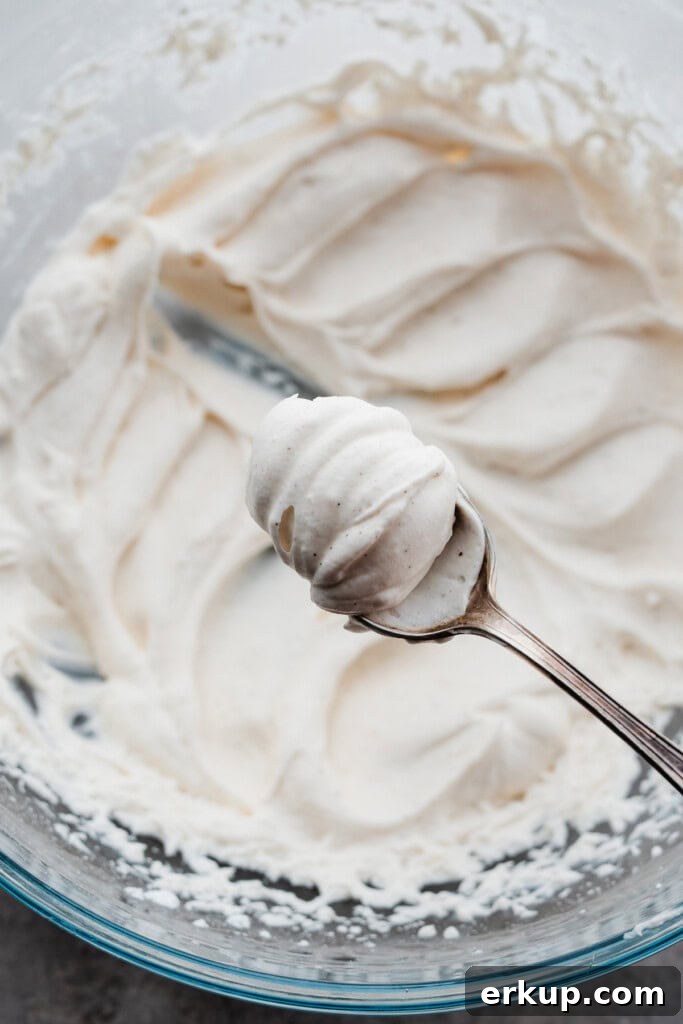
Alternate mixing methods
- Stand mixer – Use the whisk attachment on medium-high until stiff peaks form.
- Hand whisk – Takes longer but works well; share the task if needed to rest your arm.
- Blender – Pulse on medium for 1–2 minutes, stirring halfway through; results can be surprisingly stable.
- Food processor – Pulse, then run on low; be cautious not to overmix and deflate the cream.
- Immersion blender – May produce softer peaks; useful in a pinch but not ideal for very stiff peaks.
- Mason jar – Close and shake vigorously; fun and portable but less consistent for stable peaks.
How to flavor whipped cream
- Citrus: Add 1–2 tablespoons of lemon, lime, or orange juice per cup of cream at the start of mixing.
- Freeze-dried fruit: Pulse 1/4 cup freeze-dried fruit to a powder per cup of cream for vibrant fruit flavor and color.
- Chocolate: Add 2 tablespoons cocoa powder per cup of cream at the start of mixing.
- Nutella or mascarpone: Fold in for a richer, creamier topping; these versions may be best dolloped rather than piped.
Serving and storing
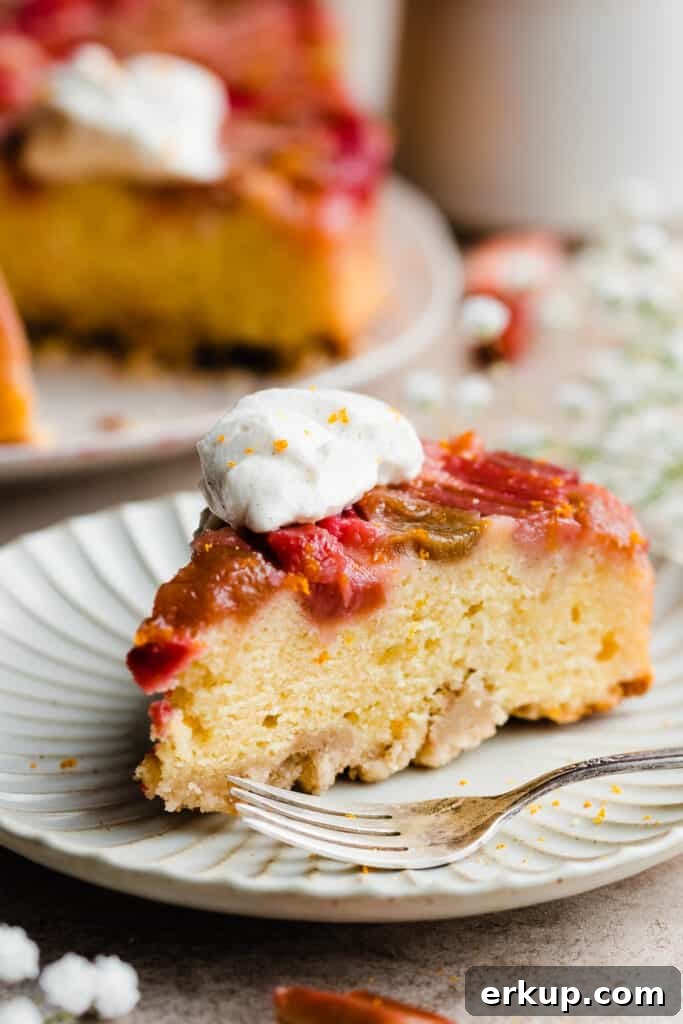
Whipped cream is best used immediately. Unstabilized cream can lose structure or weep over time. Stabilized whipped cream holds its shape on a dessert in the fridge for a few days, making it possible to prepare decorations in advance.
Expert baking tips
- Keep everything cold: If the cream won’t whip, chilling the bowl and beaters helps dramatically.
- Serve quickly: Make whipped cream just before you need it unless stabilized.
- Taste as you go: Check sweetness at soft peaks and add more powdered sugar if desired to avoid overmixing.
FAQs
How do I fix overwhipped cream?
If the cream looks lumpy or curdled from overmixing, add a few tablespoons of cold heavy cream and mix on medium until smooth. You may need to repeat this once or twice.
Why did my whipped cream flatten or deflate?
Overmixing or letting whipped cream sit too long can cause deflation. If it never thickened, the cream may have been too warm or past its expiration.
Can I make whipped cream without a hand mixer?
Yes. A stand mixer, whisk, blender, food processor, or even shaking in a mason jar can work, though texture and stability vary.
My cream was cold but still didn’t whip. What happened?
That can indicate the cream was spoiled or near spoilage and should be discarded. Try fresh cream from a different container.
Special tools
- Mixing tool of choice – Stand mixer with whisk, hand mixer, whisk and bowl, blender, food processor, or jar for shaking.
Desserts to pair with whipped cream
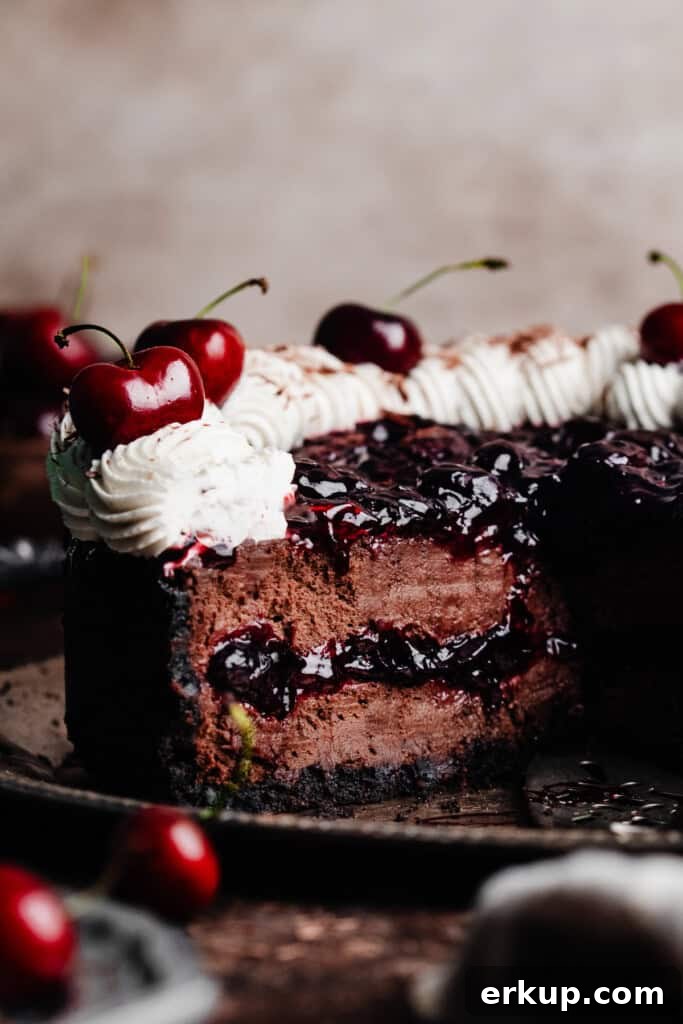
- Black Forest Cheesecake
- Peach Cobbler Cheesecake
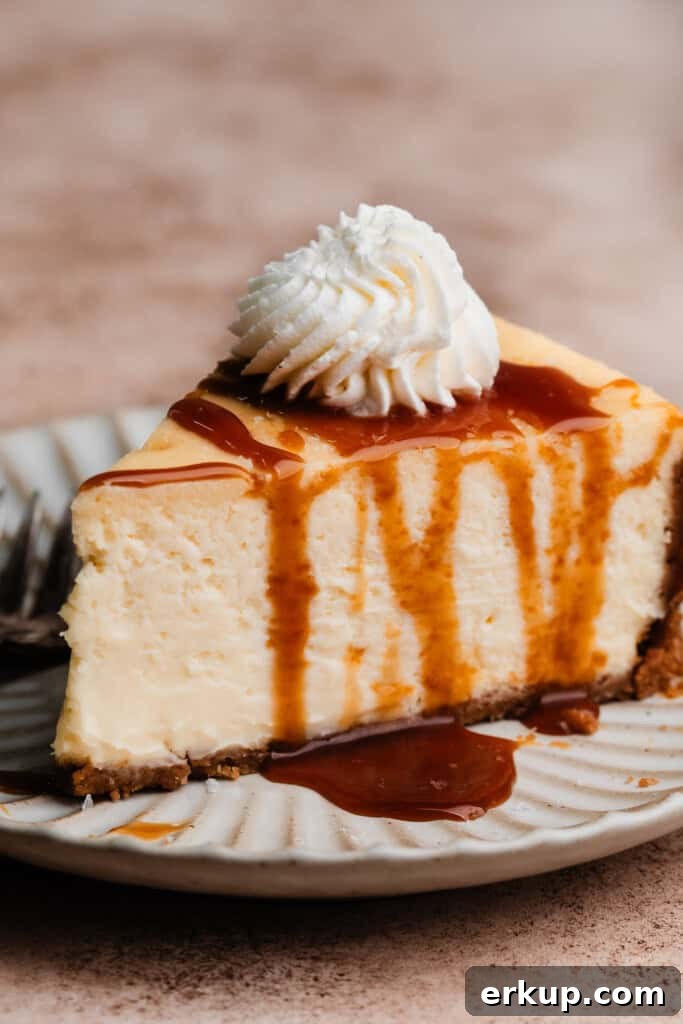
- Key Lime Cheesecake
- Pineapple Upside Down Cheesecake
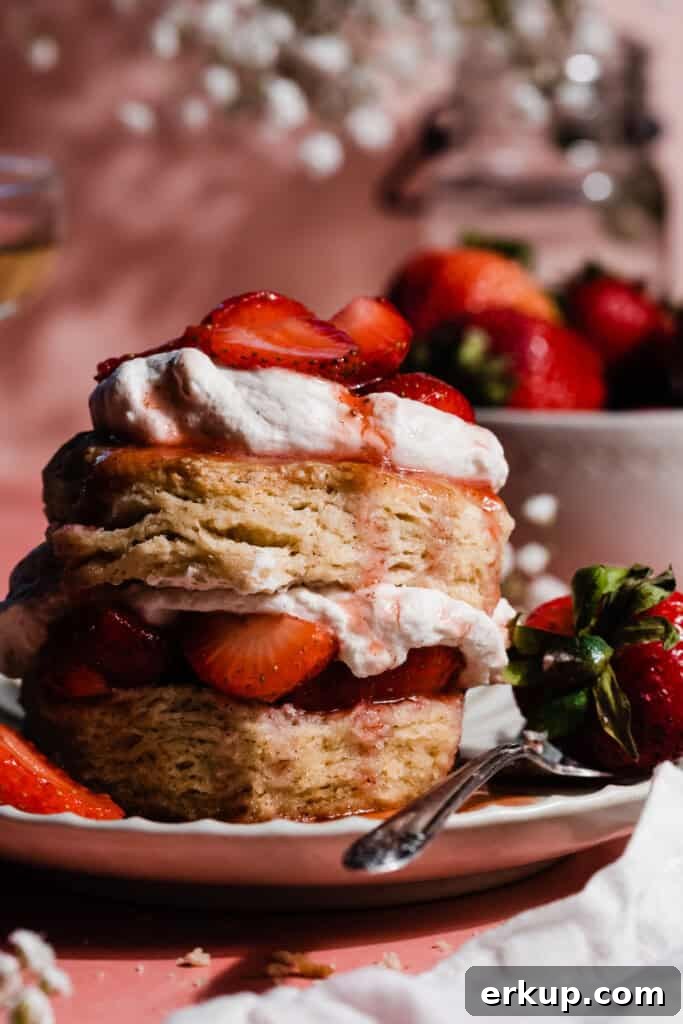
- Strawberry Shortcake
- Pumpkin Pie Cookies
- No-Bake Nutella Tart
- Berries & Cream Cake
Recipe: Homemade Whipped Cream
Servings: 6 (to 8 servings) • Prep: 10 minutes • Total: 10 minutes
Ingredients
For the whipped cream:
- 1 cup cold heavy cream (240 g)
- 1/4 cup powdered sugar (29 g) — up to 1/2 cup to taste
- 1 tablespoon vanilla extract or vanilla bean paste (15 g)
For stabilizing (optional):
- 3/4 teaspoon plain gelatin
- 3 teaspoons water (15 g)
Instructions
- Prep: Ensure the heavy cream is very cold and not expired. If desired, chill the bowl and beaters for 20 minutes.
- Make the whipped cream: Combine cream, powdered sugar, and vanilla in a large bowl. Beat on medium-high speed until it thickens. Taste at soft peaks and adjust sweetness as desired. Continue to soft or stiff peaks as needed. Do not overmix.
- Stabilize (optional): Sprinkle gelatin over the water and let sit until thick. Warm briefly to melt and liquefy. Begin whipping the cream, and when it starts to thicken, slowly stream in the liquid gelatin on low speed. Continue to beat to stiff peaks.
- Serve & store: Use immediately for best texture. Unstabilized cream is best fresh; stabilized and piped cream will hold in the fridge for a few days.
Notes
See the guidance above for alternative mixing methods, flavor variations, and tips for piping and dolloping.
Nutrition (per serving, approximate)
Calories: 161 kcal • Fat: 14 g • Carbohydrates: 6 g • Protein: 1 g
If you try this recipe, leave a comment and star rating in your own system or notes. Feedback helps refine technique and keeps recipes practical for home cooks.